Noticias
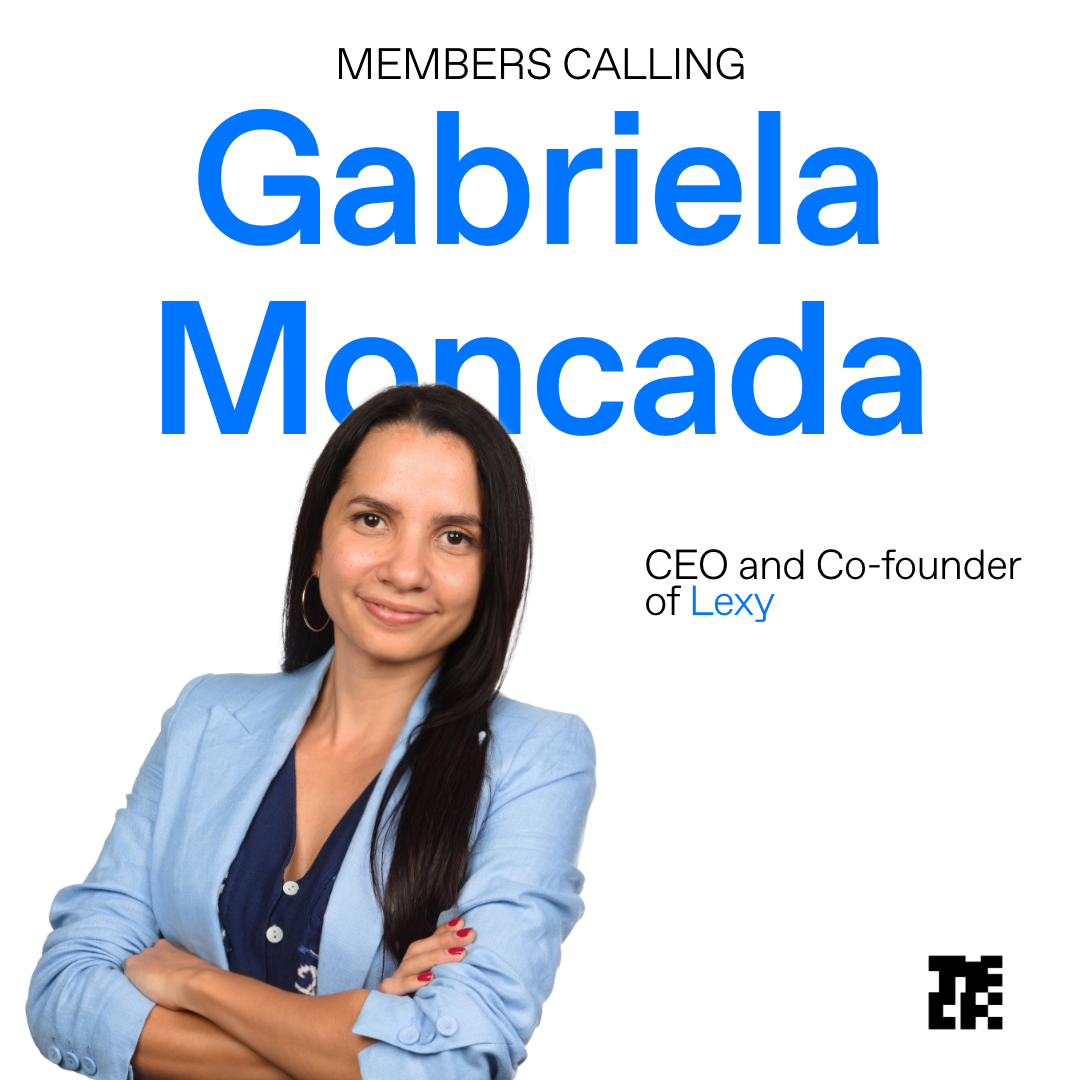
Members Calling #166 | Gabriela Moncada: “Before obsessing over selling, obsess over solving the problem well”
In communication, arriving late to a topic is the same as saying nothing. Brands compete every day to be part of the conversation. They try to understand their audience, detect new trends, and join the trending topics of the moment on time… But the pace is becoming increasingly frantic. Conversations emerge, explode, and disappear before many companies have even finished approving the copy.
Lexy was created to solve this challenge. Through artificial intelligence, the startup identifies hot topics according to each company’s profile and helps adapt their communications to the conversations of the moment.
Behind the project is Gabriela Moncada (Caracas, 1988), CEO and co-founder of the platform. An economist by training, with specializations in international business management, digital marketing, and web development, she began entrepreneurship at a very young age alongside her family in Venezuela. Today, Lexy brings together three worlds that have always accompanied her: entrepreneurship, communication, and technology. She explains how.
TB: What is the purpose of your project?
GM: Lexy’s purpose is to help companies, entrepreneurs, and organizations communicate better, with more strategy and less friction. Most companies have very valuable propositions, but they struggle to turn what they know, what they do, and what is happening in their sector into useful content for their audience. Lexy helps them precisely at that point: it connects their brand data with relevant trends and news to turn all of that into more strategic, personalized, and actionable publications. We want communication to stop being an operational burden and become an advantage for growth.
TB: Where does your project stand now, and where do you see it in two years?
GM: Lexy is currently in a stage of growth, commercial validation, and product consolidation. In two years, I see Lexy as a leading platform for automating content creation for small and medium-sized companies; a tool that works with you, proposes strategic content, and allows you to maintain creative control, but with much less operational effort.
TB: A key decision that has shaped your project.
GM: One key decision has been to be very clear about the problem we wanted to solve, while remaining flexible along the way. When we started Lexy more than four years ago, almost nobody was talking about artificial intelligence. Many of our potential clients still did not fully understand how this technology could help them in their day-to-day work. Over the years, the market changed completely, AI became omnipresent, and that forced us to adapt, differentiate ourselves quickly, and make decisions in an environment with a lot of noise. I think what has shaped us the most has been staying focused without becoming rigid, listening to the market, evolving the product, and continuing to work on a need that we clearly saw in companies.
TB: What has been the biggest challenge you have faced, and what has it taught you?
GM: One of the biggest challenges has been sustaining the project during moments of great uncertainty. Entrepreneurship is not as simple as it may seem. There are stages when you have fewer resources, a smaller team, and many difficult decisions ahead.
In our case, we went from being a larger team to having to keep moving forward with very little capital and just two people pushing something we strongly believed in. Little by little, we began to grow again, build a team, and bring forward the product we have today. That taught me that when you have a clear focus and work with the right people, you can go through very difficult moments without losing direction.
TB: The best advice you have been given.
GM: Before becoming obsessed with selling, become obsessed with solving the problem well. When you build something that truly helps, selling stops feeling like a transaction and becomes a natural consequence of providing value. For me, that advice has been very important because it reminds me that a company is not built only from what it wants to offer, but from what its clients truly need.
TB: Todos cambiamos con el tiempo. ¿Has cambiado de opinión sobre algo?
GM: I used to think you had to analyze a lot before making a decision. Over the years, and especially through entrepreneurship, I have understood that clarity often comes after taking action, not before.
TB: A professional role model who inspires you.
GM: Claudia de la Riva, CEO and founder of Apolo Kids. I am inspired by her energy, her consistency, and her ability to keep going even when the path is not easy. Entrepreneurship requires a lot of resilience, and I think Claudia represents very well that combination of vision, passion, and execution capacity needed to build a company with impact.
TB: What do you value most in the people you work with?
GM: I greatly value commitment and empathy. In a startup, especially when the team is small, each person has a huge impact. It is not only about technical talent, but also about attitude, responsibility, and the ability to build with others. At Lexy, we have a small but very committed team, and I believe that is one of our greatest strengths.
TB: A technology that will shape the future.
GM: I believe quantum computing will profoundly shape the future.
TB: A startup or company you admire and why.
GM: Muse Scene Lab, because they are transforming a very traditional industry such as music education by combining technology, creativity, and a very clear vision of the future. I am especially inspired by how they are bringing new ways of practicing, learning, and connecting with music. Entering such an emotional sector, and one so deeply rooted in classical methods, is not easy. I believe projects that dare to innovate in spaces like this have great merit, because they do not only create technology; they also change habits, experiences, and ways of learning.
TB: What do you do to disconnect?
GM: Discovering new places and connecting with other cultures. I feel that traveling broadens your perspective, helps you understand that there is not just one way to live or see the world, and allows you to return with more perspective. I also meditate and go to the gym.
TB: A book to recommend.
GM: I would recommend ‘Control’, by Freddy Vega, especially for people who are starting a business or building something of their own. It is a book that connects very well with the idea of taking responsibility for your path, your decisions, and your growth. Entrepreneurship often means moving through uncertainty, and I think this kind of reading helps you remember that, although you cannot control everything, you can control how you respond, how you learn, and how you move forward.
TB: A song that defines your current stage in life.
GM: ‘Imagine’, by John Lennon. Because of the moment we are living through as a society, I think it remains a very necessary song. It talks about imagining a different world, one that is more human and more united. I wish some songs could become reality.
TB: A recipe, a dish, a restaurant.
GM: Eatvolve, in Italy. They say they are not a restaurant because they go beyond that, and I think you understand it when you get to know them. It is a concept where food is approached from the perspective of well-being. Their dishes are gluten-free, dairy-free, free from added sugars, and free from additives. One of their phrases is: “You don’t eat there, you nourish yourself there.”
TB: A place in the world.
GM: Canaima, in Venezuela. It is one of the most impressive places I have ever visited. Angel Falls, the highest waterfall in the world, is there, but beyond that, it is a place where nature feels immense, pure, and imposing. It is one of those places that makes you feel small, but at the same time gives you an incredible connection with this wonderful planet.
TB: Where would you invest 100k?
GM: Today, I would invest it in Lexy, without a doubt. We are building something with great potential and at a key moment to accelerate. I would invest in continuing to strengthen product, sales, and growth, in order to reach more companies and prove that AI can help communicate better when combined with data, strategy, and real knowledge of the user.
TB: If you were not an entrepreneur…
GM: I would probably dedicate myself to mentoring and supporting other projects. It is something I already do and that fulfills me a lot. I enjoy helping other entrepreneurs organize ideas, question assumptions, detect opportunities, and move forward with greater clarity. Entrepreneurship is not easy, and often an external perspective can help you see what is difficult to identify from within.
TB: What is Tech Barcelona to you?
GM: It is a key community within the city’s entrepreneurial ecosystem. I was already familiar with its work before creating Lexy, and I have seen how, in recent years, it has helped connect, showcase, and strengthen startups, entrepreneurs, and technological initiatives. I believe spaces like this are very necessary, because entrepreneurship can be a very lonely path if you do not have a community around you.