Noticias
Tech Up Nights Vol. 21 | JetBrains & i2Cat
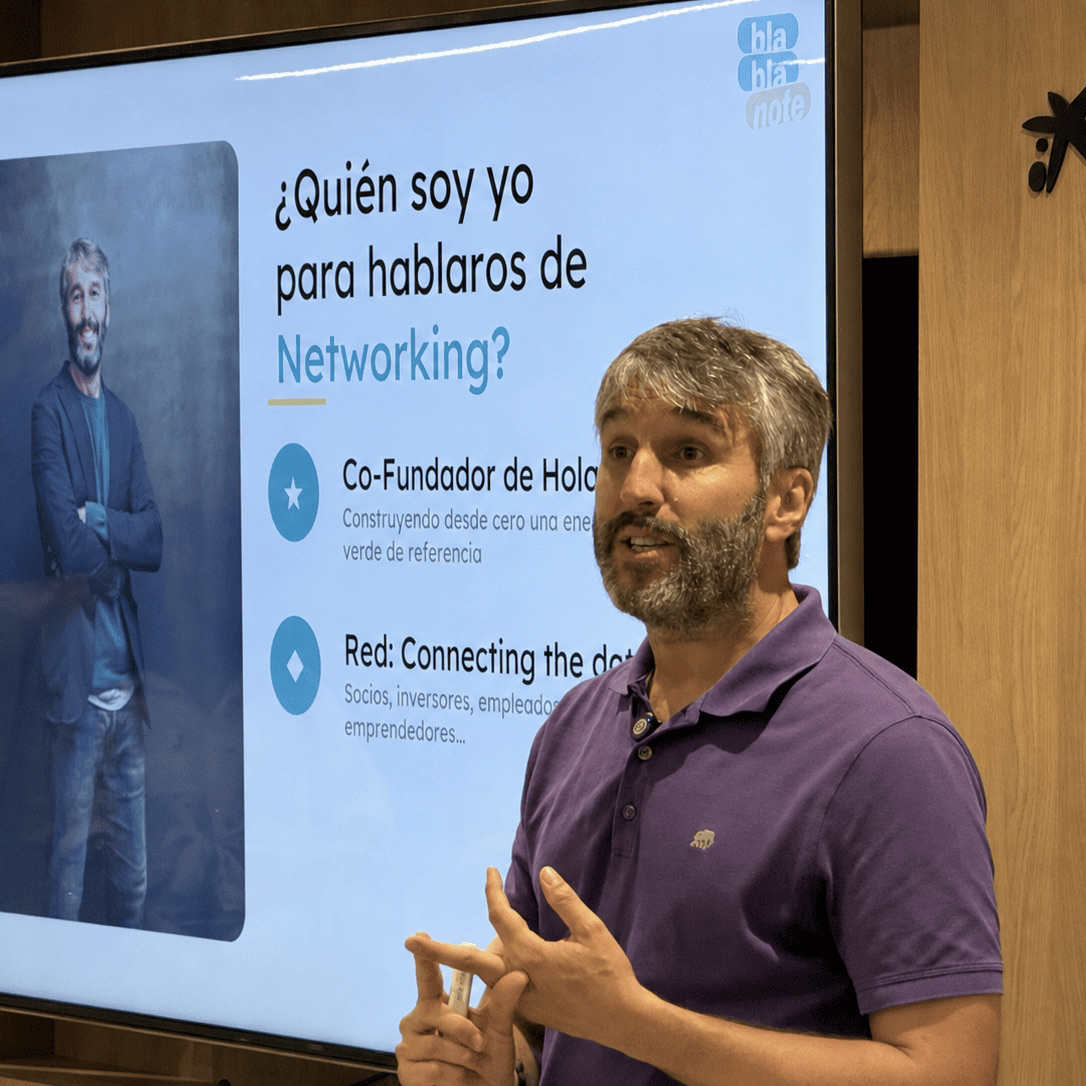
Natália Kocichová and Daniil Shulgin, JetBrains
At this point, we’re all using AI. The question is how to make the most of it.
According to JetBrains’ Developer Ecosystem Survey 2026, 95% of startups already use AI tools at work, 80% use coding agents several times a week, and 71% of developers say they save eight hours or more.
But generating code doesn’t mean the job is done. We need to review what agents produce, make sure it’s secure, and check that it works as expected. And, of course, keep an eye on the cost. Knowing what to delegate, how to coordinate agents, and when to take control matters. Because if you end up spending hours fixing their mistakes, the time savings don’t look quite so appealing.
Víctor Montilla and Lluís Costa, i2CAT
Changing a satellite’s hardware once it’s in orbit is complicated. Changing what it does through software is much more feasible.
With Flexible Payload OS, the i2CAT innovation and research centre is working on a solution that makes it possible to reconfigure signal processing and run third-party applications in isolated environments without restarting the system.
For example, a satellite could support emergency maritime communications while flying over the ocean and, when passing over land, process data from agricultural sensors. The same infrastructure, different uses, and more ways to make the most of each mission. This is part of what makes Space-as-a-Service so interesting: the ability to adapt in-orbit resources to new needs rather than relying on a single function throughout the entire mission.
The project builds on validation experience from the Minairó mission, in collaboration with Sateliot, and is part of 6GStarLab, developed with Open Cosmos to test technologies in orbit and work towards future non-terrestrial networks.