17 June 2026
News
Noticias
A Dialogue Between the European Commission and Barcelona’s Tech Ecosystem
17 June 2026
News
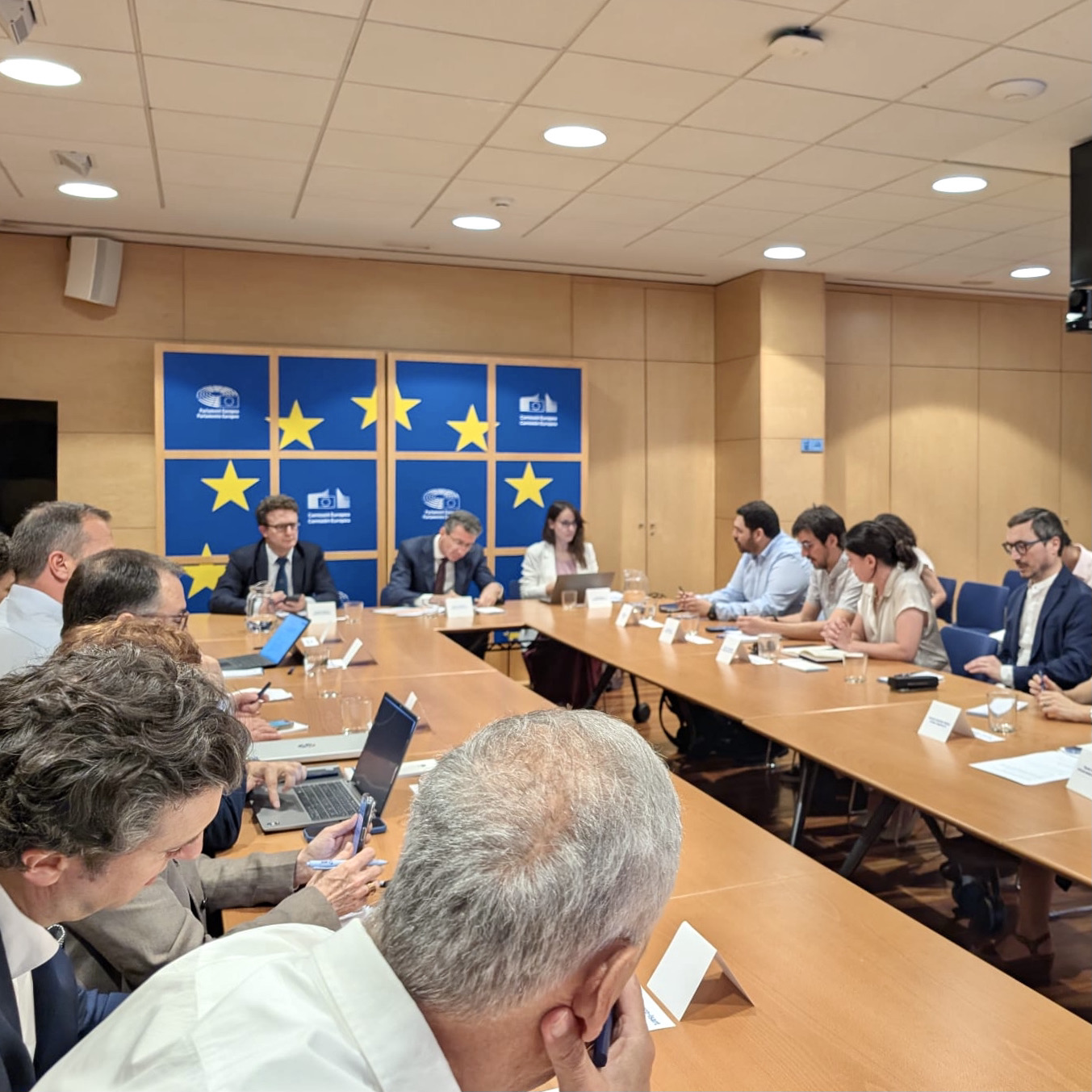
This week, the Catalan tech ecosystem met with Mr. Marc Lemaître, Director-General for Research and Innovation at the European Comission, to discuss the main challenges facing European startups, scaleups, research centres and scientific infrastructures, and to explore policy measures that could strengthen Europe’s technological competitiveness.
- Funding. Lemaître acknowledged the need to strengthen European funding mechanisms for startups and scaleups. He highlighted that the European Innovation Council (EIC) has significantly increased its investment capacity. He also referred to the launch of the new Scaleup Europe Fund, designed to support larger financing rounds and help European technology companies grow at scale. According to Lemaitre, the ambition is to mobilise investment rounds approaching €100 million and narrow the financing gap with the United States. He stressed that Europe must seize the opportunities presented by emerging technologies such as artificial intelligence and create many more globally competitive technology companies.
- Regulation. On regulation, Lemaître recognised that fragmentation remains one of Europe’s main competitiveness challenges. He noted a strong commitment within the European institutions to further harmonise regulations and reduce barriers between Member States. He also referred to initiatives related to innovation procurement and upcoming measures aimed at simplifying administrative processes. His key message was that Europe must increasingly function as a true single market rather than a collection of national markets.
- Demand creation. Lemaître agreed that both public administrations and large European corporations tend to be highly risk-averse when adopting new technologies. He argued that Europe needs a stronger culture of experimentation and greater willingness to test innovative solutions. Creating “safe spaces” for innovation and expanding public procurement of innovative technologies were highlighted as important tools to stimulate demand and accelerate the growth of technology companies. He also noted that Europe still has significant room to increase overall demand for innovation.
- Infrastructure. Regarding scientific and technological infrastructures, Lemaitre emphasised that Europe already possesses world-class assets. Rather than focusing exclusively on building new facilities, he argued that the priority should be improving access, coordination and utilisation of existing infrastructures. He advocated for a genuinely European approach, allowing researchers, startups and companies to access facilities regardless of their country of origin. In his view, more efficient and collaborative use of existing infrastructures could substantially increase their scientific and economic impact.
- Talent. On talent, Lemaitre acknowledged that Europe benefits from an exceptional scientific base but still has considerable room for improvement in technology transfer and commercialisation. He stressed the importance of strengthening links between research, entrepreneurship and business development, while also improving Europe’s ability to attract and retain highly skilled professionals. Given the growing global competition for researchers, engineers and entrepreneurs, he considered talent attraction and retention to be a strategic priority for Europe.