13 March 2025 Members Calling

Noticias

Members Calling #119 | Anna Martín: “The biggest challenge has been turning the idea into reality”
13 March 2025 Members Calling

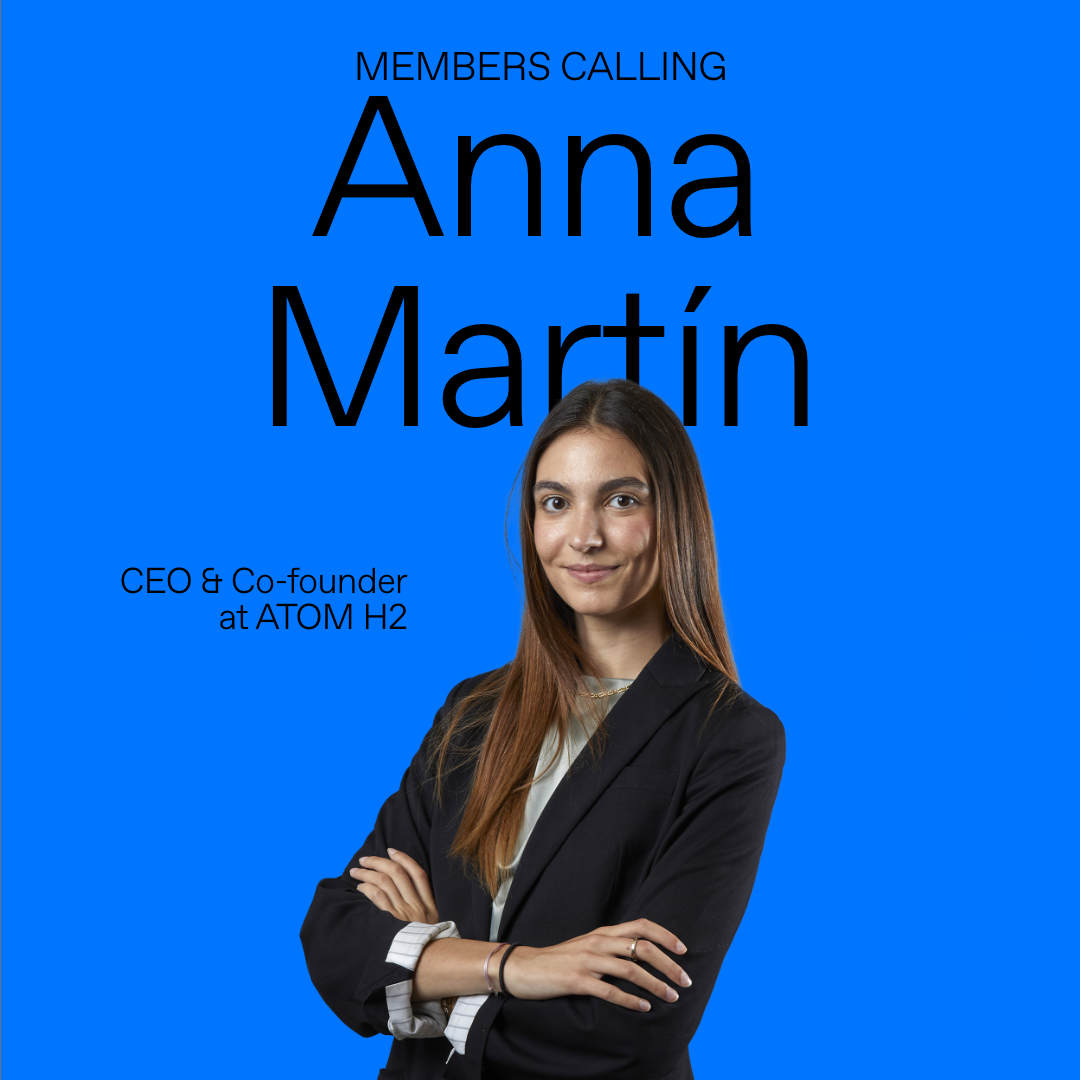
The idea was born while Anna Martin (Barcelona, 2001) was studying Industrial Design Engineering at Elisava. Along with Marcel Rovira and Lucas Vicén, she developed a groundbreaking proposal focused on converting excess energy into hydrogen. The project won the ImaginPlanet Challenge award and gained momentum after an incubation program in Silicon Valley and an initial investment of €50,000. Finally, in 2023, they founded the company ATOM H2.

“The biggest challenge has been turning the idea into reality,” says Anna Martín, CEO and co-founder of the company. Trained in entrepreneurship at Esade, she now represents the youthful and entrepreneurial spirit of the Tech Barcelona ecosystem.


TB: What is the purpose of your project?

AM: At ATOM H2, we work to transform energy access in remote areas through advanced and sustainable solutions. Our goal is to ensure a continuous, reliable, and clean energy supply, even in the most challenging locations, by using a hybrid system that integrates solar panels, hydrogen storage, and batteries. We aim not only to replace fossil fuels but also to offer an alternative that reduces environmental impact and fosters development in isolated communities, paving the way for a more accessible and sustainable future.


TB: Where is the project right now, and where do you see it in two years?

AM: Currently, ATOM H2 is in the pilot phase, conducting tests with clients such as Cellnex and Estabanell. In two years, we see ourselves fully operational in the market, offering a competitive and sustainable energy solution that will transform energy access in sectors like telecommunications and remote industries.


TB: A great idea you’ve had.

AM: Founding ATOM H2 has been one of the best decisions of my life, but even more important has been surrounding myself with an exceptional team whose passion and talent make every achievement possible.


TB: What’s the biggest challenge you’ve faced?

AM: The biggest challenge has been turning the idea into reality: starting from scratch and getting others to trust our vision. Convincing the first investors and clients was crucial, but thanks to the commitment and support we’ve received, we’ve overcome this critical stage and continue advancing with determination.


TB: The best advice you’ve received.

AM: The best advice I’ve received is, “Focus on the problem you’re solving, not just the product you’re developing.” This principle has helped me maintain a clear vision and prioritize the real impact our solutions create, ensuring every decision is focused on adding value and addressing essential needs.


TB: A role model.

AM: Xavier Verdaguer, our mentor, trusted us and the project from the beginning, taking us to Silicon Valley and playing a key role in launching ATOM H2. His vision, values, and leadership style have been instrumental in our journey. Joan Martín, my father, is playing a very important role in the next stages, advising us on consolidating our strategy and achieving our goal of launching the product to the market.


TB: A technology that will shape the future.

AM: Quantum chips will revolutionize technology with their processing power, and nuclear fusion will redefine clean energy production, providing a sustainable and nearly limitless source.


TB: In-person or remote?

AM: I prefer in-person work because I believe face-to-face interaction enhances teamwork and fosters innovation. However, we currently have a programmer in England, and thanks to online tools, we can collaborate effectively with an international team, combining the best of both worlds.


TB: A startup or company.

AM: Imagine Creativity Center, by Xavier Verdaguer. I share its mission and vision, and I believe it’s at an unbeatable moment.


TB: What helps you disconnect?

AM: Sports, especially running and yoga, are key for disconnecting and recharging my energy. Additionally, dancing and theater are hobbies that inspire me and help me connect with my more creative side.


TB: A book to recommend.

AM: “Zero to One” by Peter Thiel. It’s an essential guide for entrepreneurs who want to create something truly innovative.


TB: A series, movie, or song that defines your current life stage.

AM: “Underdog” by Alicia Keys. This song motivates me and perfectly reflects the spirit of this stage.


TB: A recipe, a restaurant.

AM: Hisako Umi. Right now, I’m loving sushi, and this place is spectacular.


TB: A place in the world.

AM: Bali. It’s a place I’ve never been, but I’d love it to be my next destination. It’s the perfect combination of tranquility, beauty, and creativity, and I know it would be an endless source of inspiration.


TB: Where would you invest 100k?

AM: In ATOM H2, without a doubt. Scaling our technology could have a transformative impact on sustainable energy access.


TB: If you weren’t an entrepreneur…

AM: I’d probably be leaving my mark as an industrial design engineer and exploring my passion for acting on some stage or in a film.


TB: What does Tech Barcelona mean to you?

AM: Tech Barcelona is a benchmark space for innovation, talent, and collaboration. It’s been a key platform in our growth, providing us with access to an inspiring network of people and unique opportunities that have driven us forward.
27 February 2025 Members Calling

Noticias

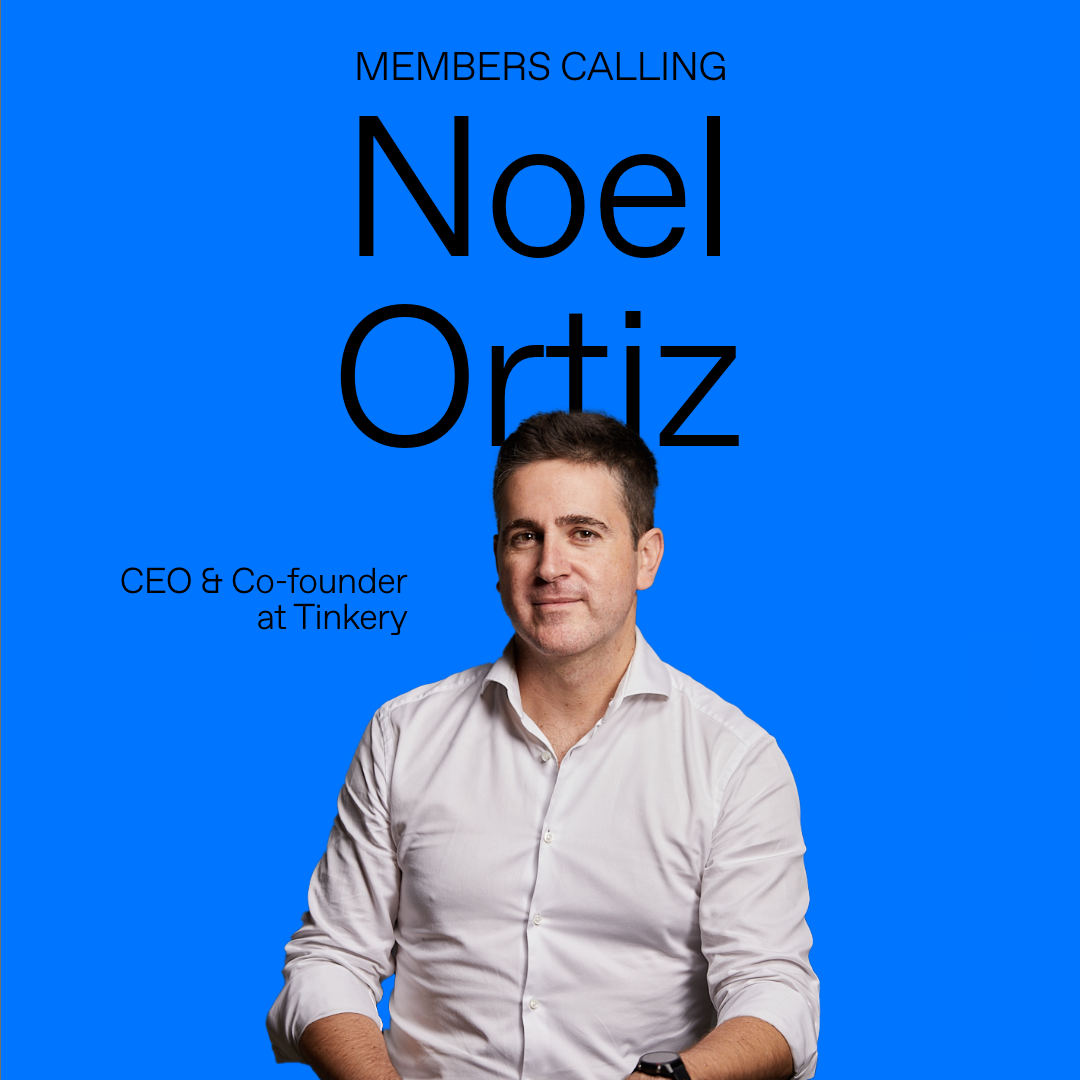
Members Calling #118 | Noel Ortiz: “We believe in a future where marketing and sales teams operate with surgical precision”

27 February 2025 Members Calling

Noel Ortiz (Vilanova i la Geltrú, 1981), a telecommunications engineer with an MBA from INSEAD and an occasional professor, built his career across Germany, the Netherlands, and Switzerland, where he was the global head of digital services for Novartis, global director of digital transformation at Accenture Song, and held several other prominent positions at major international companies. After fifteen years living in five countries and gaining experience in technology, marketing, and digital transformation, Noel returned to Barcelona to create his third startup: Tinkery, a platform that unifies companies’ commercial operations and simplifies data management and analysis.

On a personal note: “I spend my free time running, writing fiction, and learning new things with my two children.”


TB: What is the purpose of your project?

NO: Tinkery is redefining how businesses grow by eliminating friction and empowering every decision with intelligence and automation. We believe in a future where marketing and sales teams operate with surgical precision, turning data into real impact. We don’t just optimize processes; we reinvent the way companies scale.


TB: Where is it currently, and where do you see it in two years?

NO: With a fully functional beta, we are signing our first paid pilots and are about to close a funding round. We will launch the commercial version of Tinkery this spring. In two years, we will have carved out a space in the market, with a recognizable brand within the commercial operations world and a team spread across three continents.


TB: What’s a good idea you’ve had?

NO: Diving into the entrepreneurial world full-time after two decades of mulling it over.


TB: What’s the biggest challenge you’ve faced?

NO: Professionally, developing the ability to reinvent myself and quickly adapt to new languages, cultures, roles, and ways of working every few years since I first moved to Germany two decades ago.


TB: What’s the best advice you’ve received?

NO: Something my father often repeated to me when I was young: “Don’t worry about the obstacles life throws at you, because if something can be fixed, it will be. And if not, why bother?”


TB: A role model.

NO: Anna Klebus, who led my department at Novartis. I admire her integrity and positive attitude even in tough situations, as she has advanced in her career not only because of her professionalism but also because of who she is—facing challenges “one step at a time” and never losing her smile. She taught me how to deal with bureaucracy and internal politics, how to be patient, and how to turn a “not now” into a “maybe later.”


TB: A technology that will shape the future.

NO: Genetic reprogramming technologies, such as CRISPR (Clustered Regularly Interspaced Short Palindromic Repeats), as well as the use of AI for discovering new drugs and anti-aging therapies, are capable of predicting molecular structures and analyzing large volumes of biomedical data. Their applications in regenerative medicine and gene therapies are transforming health as we have known it so far.


TB: In-person or remote?

NO: Hybrid! In-person for decision-making and solidifying the company culture, remote for deeper work.


TB: A startup or company.

NO: GitLab, for its transparency.


TB: What helps you disconnect?

NO: Sports. It completely changes the perspective with which I approach everyday life.


TB: A book to recommend.

NO: “La singularidad”, by my good friend Carlos Fenollosa.


TB: A series, movie, or song that defines your current life stage.

NO: Forrest Gump, not so much because I relate to the protagonist’s idea of “stupid is as stupid does,” but for his way of facing extraordinary situations where there are no limits or horizons.


TB: A recipe, a restaurant.

NO: Gyros from any Greek taverna, without a doubt.


TB: A place in the world.

NO: Tokyo, for its uniqueness. Basel, for the memories.


TB: Where would you invest 100k?

NO: In our team, because they have been dedicated to Tinkery for many months with all the passion in the world, and they deserve it. This way, we could grow it with new faces and talent.


TB: If you weren’t an entrepreneur…

NO: I would be a writer.


TB: What is Tech Barcelona to you?

NO: It is a reference in the entrepreneurial world, a meeting place for restless minds looking to connect with others who are facing (and enjoying) the challenges of growing a small seed.

13 February 2025 Members Calling

Noticias

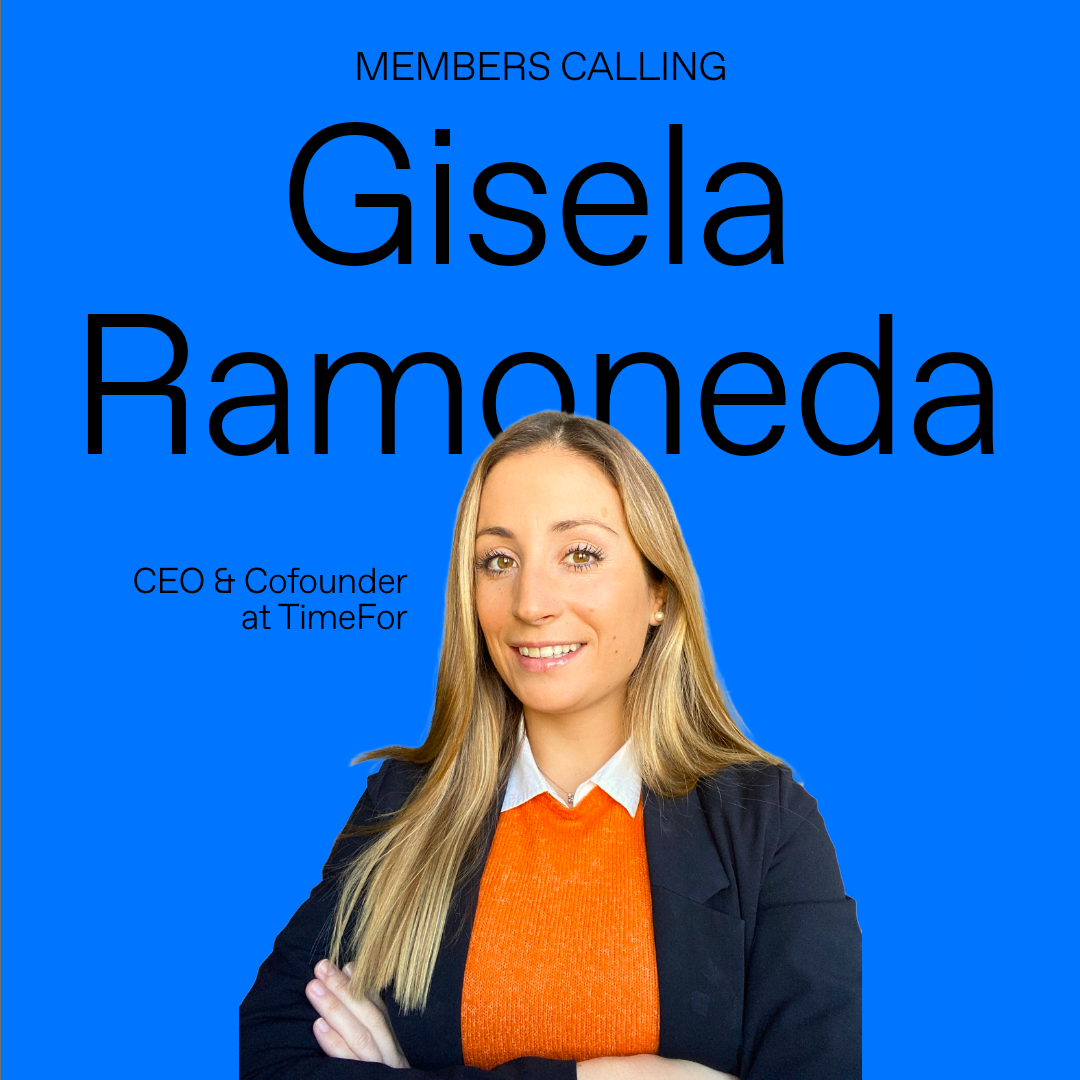
Members Calling #117 | Gisela Ramoneda: “The paradox of giving up stability to pursue something uncertain but transformative”

13 February 2025 Members Calling

After more than five years in quality control and management for pharmaceutical and healthcare product companies, Gisela Ramoneda (Balaguer, 1994) broke the mold, shifted her career, and founded a mobile app. TimeFor is the social network for services, a platform where you can find everything from cleaning and repairs to pet care and freelancers with ‘superpowers’.


TB: What is the purpose of your project?

GR: Our main goal is for TimeFor to impact society and transform the way we access services, promoting the collaborative and community economy. It’s a hybrid concept: through a service marketplace in the form of a subscription-based social network, we aim to build the future of service social networks by efficiently connecting ‘Givers’ (those offering services) and ‘Receivers’ (those receiving services) to transform the everyday experience.


TB: Where is it currently, and where do you see it in two years?

GR: In October 2024, we launched our MVP in the Spanish market and started gathering the first user metrics, identifying high-demand services and areas of improvement in the app. Currently, we’re expanding the team to improve the user experience and start marketing campaigns, aiming to attract thousands of users and raise our second round of investment, already underway and partially committed by ENISA. In two years, we see ourselves with a team of 6-8 people, in an office, consolidating TimeFor as the leading platform in Spain and preparing for internationalization from the third year. Our goal is to grow sustainably, constantly innovating and strengthening our community.


TB: What’s a good idea you’ve had?

GR: Creating TimeFor. I saw the potential in the service sector, both for individuals and businesses, but also the difficulties of creating an app that would change society’s culture. We were told many “no’s!”, but after raising €170,000 without having launched an MVP, I knew anything was possible. Now, seeing that we’ve solved three major problems in cities—the lack of time, money, and community—in one app, it’s priceless. That’s why now we need to make TimeFor known, so everyone can discover how easy it is to use.


TB: What’s the biggest challenge you’ve faced?

GR: The biggest challenge was leaving my professional career to fully dedicate myself and sacrifice everything for creating a tech startup, with its growth dependent on funding rounds, knowing we might not achieve everything we want. I never imagined finding myself in a paradox where, on the one hand, I give up stability, and on the other, I pursue something uncertain, but with the conviction that it’s the only way to create something truly transformative.


TB: What’s the best advice you’ve received?

GR: Never stop believing in yourself.


TB: A role model.

GR: Óscar Pierre is an inspiring role model for me. After listening to him at 4YFN in 2024 and following him on several podcasts, I was impressed by his ability to grow Glovo with great engagement and passion for transforming the market. His perseverance in raising capital rounds and achieving solid growth is a lesson in consistency. I also admire Yaiza Canosa for her success with GOI, her strategic approach, and her team management towards a clear goal.


TB: A technology that will shape the future.

GR: AI and matchmaking algorithms are revolutionizing the connection between people and services. They analyze data to offer personalized recommendations in areas like dating, employment, and products. This improves efficiency and the digital experience, adapted to each user.


TB: In-person or remote?

GR: Hybrid.


TB: A startup or company.

GR: Freshly Cosmetics.


TB: What helps you disconnect?

GR: Padel, sports, family, and friends.


TB: A book to recommend.

GR: ‘Atomic Habits’ by James Clear.


TB: A series, movie, or song that defines your current life stage.

GR: ‘The Social Network’ or ‘Spotify: The Playlist’—both stories reflect the power of innovation, perseverance, and the entrepreneur’s vision to transform an idea into a global business.


TB: A recipe, a restaurant.

GR: My favorite recipe is a good pasta carbonara, a classic that never goes out of style. As for restaurants, I really enjoy discovering new Japanese and fusion places in Barcelona, always on the lookout for unique and exotic flavors.


TB: A place in the world.

GR: I would like to visit Japan because I believe the cultural shock must be incredible.


TB: Where would you invest 100k?

GR: In TimeFor, without a doubt!


TB: If you weren’t an entrepreneur…

GR: I’d probably be exploring new opportunities and businesses that could positively change society’s culture.


TB: What is Tech Barcelona to you?

GR: A network of entrepreneurs and people from the startup ecosystem where we can share experiences and build community.

6 February 2025 Members Calling

Noticias

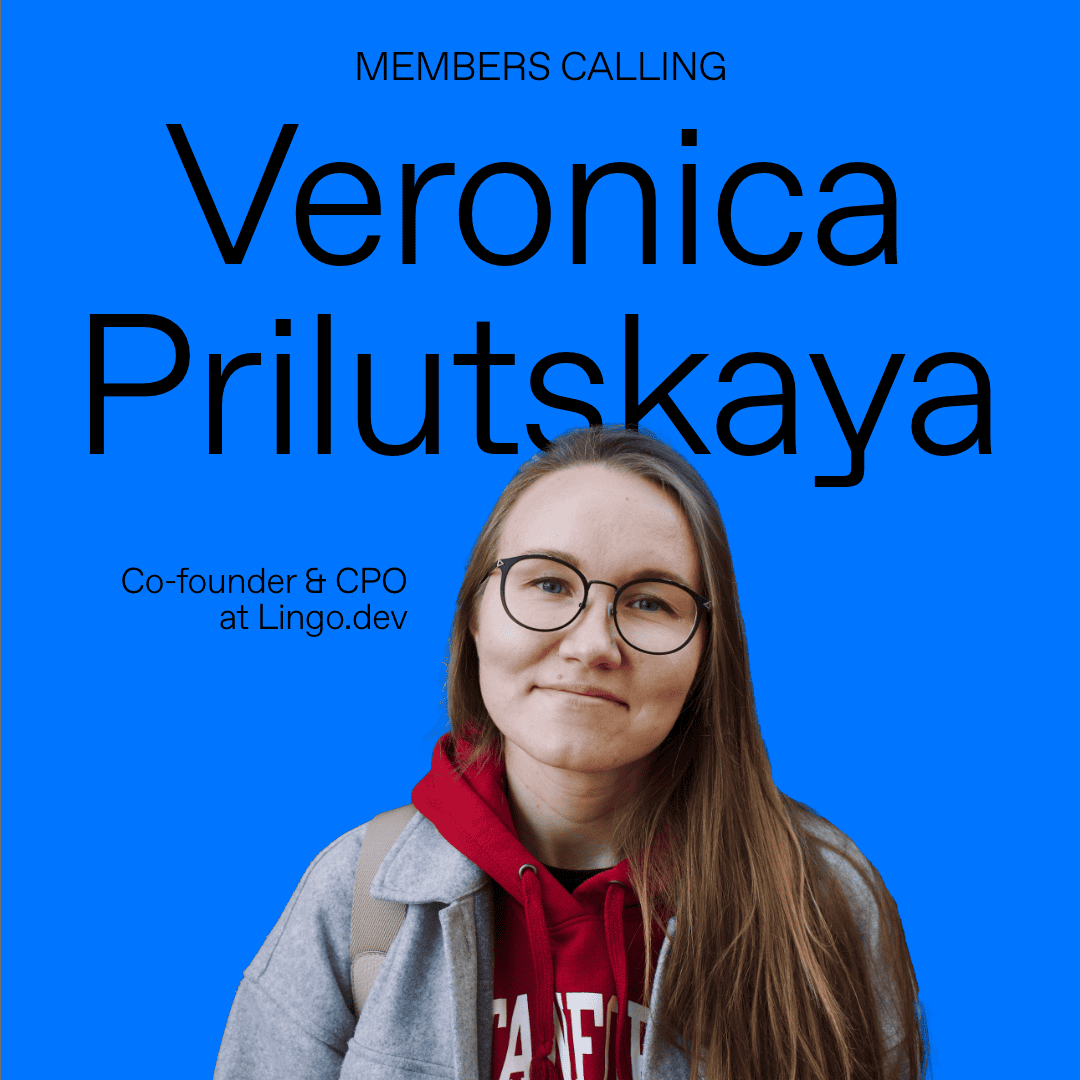
Members Calling #116 | Veronica Prilutskaya: “Complex AI should feel simple to users”

6 February 2025 Members Calling

By the age of four, Veronica Prilutskaya (Belarus, 1993) was already competing in math contests. She went on to study Computer Science and Applied Mathematics, specializing in AI and Machine Learning while leading data science initiatives for U.S. retailers and Japanese companies.

She later co-founded Lingo.dev, an AI-powered localization tool that helps developers automatically translate software into multiple languages.


TB: What is the purpose of your project?

VP: Making AI understand software context deeply enough to produce authentic translations instantly. We’re turning what used to be a manual, error-prone process, into intelligent infrastructure that just works.


TB: Where are you at and where do you see it in two years?

VP: Our AI engine currently processes millions of strings across 83 languages. In two years, we’ll make AI-powered localization as fundamental to software development as databases or authentication.


TB: A good idea you’ve had.

VP: Building AI systems that learn from how developers actually structure their code. This helped us automate localization while preserving the context that matters for each product.


TB: What is the biggest challenge you have faced?

VP: Teaching machines to understand product context at scale. Everyone said accurate AI localization was impossible and we had to rethink our entire approach to prove them wrong.


TB: Best advice you’ve ever been given.

VP: Complex AI should feel simple to users. If developers need to understand how our AI works to use it, we’ve failed.


TB: A role model.

VP: My university mathematics professor who showed me how elegant solutions emerge from deeply understanding complex problems. She approached each challenge with both rigor and creativity.


TB: A technology that will shape the future.

VP: AI that augments human creativity instead of replacing it. Infrastructure that handles complexity automatically so humans can focus on innovation.


TB: Face-to-face or remote?

VP: Remote-first with strategic in-person collaboration. We built our first AI models remotely across different continents, proving that distance doesn’t limit innovation.


TB: A startup or company.

VP: GitHub Copilot. They showed how AI can enhance developer workflow without getting in the way.


TB: What makes you disconnect?

VP: Hiking, there’s something about solving complex AI problems while walking in nature that brings clarity.


TB: A book to recommend.

VP: ‘Zero to One: Notes on Startups, or How to Build the Future’, by Blake Masters and Peter Thiel, resonated deeply with our mission to rebuild localization from first principles rather than iterating on broken processes.


TB: A series, movie or song that defines your moment in life.

VP: ‘A Beautiful Mind’ reminds me that breakthrough innovations often come from seeing patterns others miss.


TB: A recipe, a restaurant.

VP: Paella at Maná 75 in Barcelona is where we’d brainstorm AI architectures and debate the future of software localization.


TB: A place in the world.

VP: Barcelona, where we found the perfect blend of tech innovation and quality of life to build something meaningful.


TB: Where would you invest 100k?

VP: AI infrastructure that solves real engineering problems. Not theoretical AI research, but practical systems that make developers more productive.


TB: If you weren’t an entrepreneur….

VP: I would lead AI research at a developer tools company. The intersection of AI and developer experience is where the most interesting problems live.


TB: What is Tech Barcelona for you?

VP: A community that proves you can build world-changing AI infrastructure from anywhere, not just Silicon Valley.


30 January 2025 Members Calling

Noticias

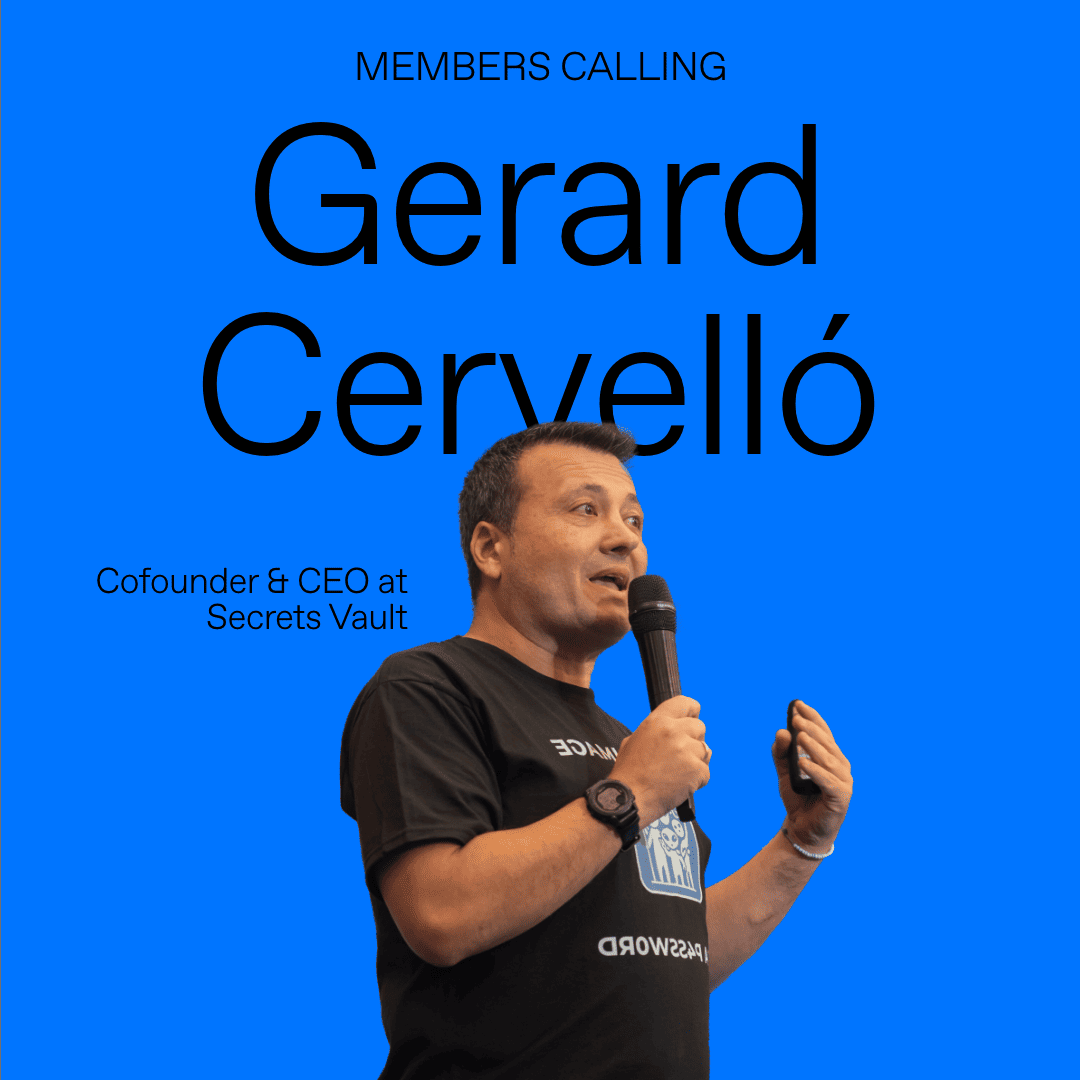
Members Calling #115 | Gerard Cervelló: “New challenges are very enriching”

30 January 2025 Members Calling

From the beginning of his professional career,  Gerard Cervelló (Tarragona, 1975), a telecommunications engineer by the UPC, was more inclined towards customer-oriented roles. In 2001, he co-founded Scytl, an electronic voting startup that, in 2014, ended up starring in one of the largest rounds ever received by a startup in Europe up to that time, with a significant contribution from the co-founder of Microsoft.

Over more than 25 years, Gerard has continued to accumulate experience in growing startups, serving as COO of Blueliv, CBO of Outpost24 and, since a year ago, also as CEO and co-founder of Secrets Vault, a startup that uses visual cryptography to protect data through images.

The startup has just closed its first round of pre-seed funding, worth €400,000 and led by Bcombinator VC II and business angels.


TB: What is the purpose of your project?

GC: To establish Secrets Vault as a global standard for secure and easy access and management of digital information. Our goal is to simplify the way people protect and access sensitive information through an intuitive mechanism. Can you imagine being able to access a system, protect sensitive information and share it with your loved ones, using a simple image?


TB: Where are you at and where do you see it in two years?

GC: We are just taking our first steps after twelve months of life, but we are very happy with the product’s process and traction in the market. In two years, we already see it running, simplifying the lives of many users and organizations around the world.


TB: A good idea you’ve had.

GC: Changing companies after 15 years. New challenges, in new areas, enrich a lot.


TB: What is the biggest challenge you have faced?

GC: Being in charge of electoral processes in several countries, including Spain. Making everything run smoothly in record time, with huge and varied teams, makes the rest of the tasks seem easy.


TB: Best advice you’ve ever been given.

GC: If you want to go fast, go alone; but if you want to go far, go in good company.


TB: A role model.

GC: Not knowing him, but following him closely: Bill Gates. If I heard myself 25 years ago I wouldn’t believe it, but it’s really inspiring today to see all that he’s done and how he uses his influence to improve the world from multiple angles.


TB: A technology that will shape the future.

GC: Cryptography, as it will become even more indispensable in this world of AI and automated interactions.


TB: Face-to-face or remote?

GC: Interestingly, until the pandemic I was a proponent of 100% face-to-face. Now I think the opposite.


TB: A startup or company.

GC: Minima Global. It powers a truly decentralized future.


TB: What makes you disconnect?

GC: Spending time with family and friends, and combining sports depending on the season, such as scuba diving, paddle tennis or cycling.


TB: A book to recommend.

GC: Too many, because I read about many subjects. On entrepreneurship, without a doubt ‘The hard things about the hard things’ by Ben Horowitz (yes, the ‘z’ in a16z).


TB: A series, movie or song that defines your moment in life.

GC: A startup is a roller coaster, so any song by Nach ZPU or Ambkor reflects my life state at any given moment.


TB: A recipe, a restaurant.

GC: The ‘confit d’ànec’ from Restaurant Masia Cervelló. And it has nothing to do with the fact that my cousin runs it 🙂


TB: A place in the world.

GC: Anywhere I can dive. Of the best ones I’ve been to, maybe Cozumel and the Red Sea.


TB: Where would you invest 100k?

GC: As of today, in Secrets Vault.


TB: If you weren’t an entrepreneur….

GC: I would be an explorer.


TB: What is Tech Barcelona for you?

GC: A community where you can exchange experiences with other roller coaster riders.

24 January 2025 Members Calling

Noticias

Members Calling #114 | Alberto Miralles: “Take care of your team”

24 January 2025 Members Calling

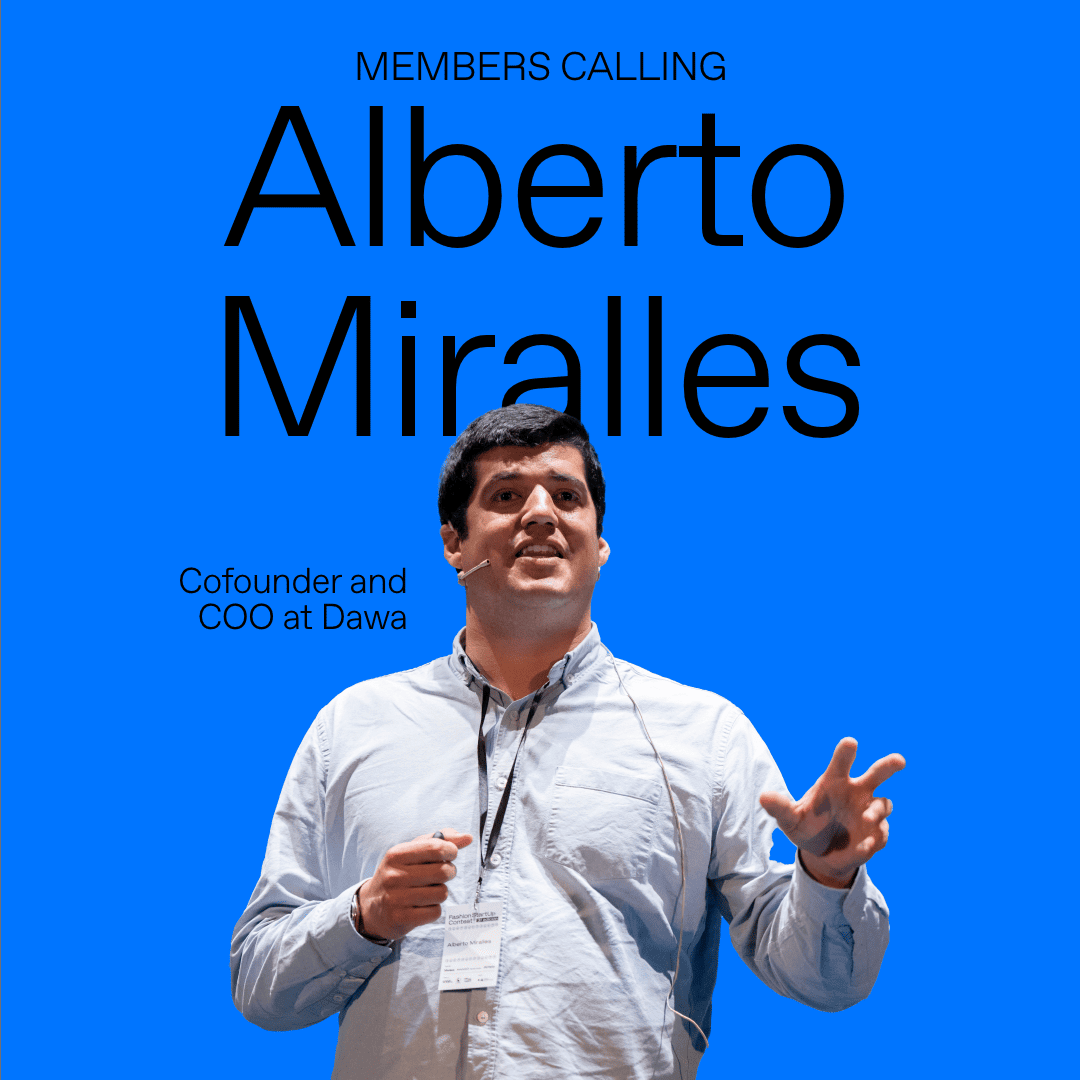
After a successful career as a handball player in teams like FC Barcelona, Logroño or the Spanish national team, Alberto Miralles (Barcelona, 1990) went from leading on the courts, to leading in business: first as CEO of the digital platform MeQuedoUno and, now, as co-founder and CRO of Dawa, a startup that not only helps online stores to efficiently manage returns, but also drives the circular economy by repairing, reconditioning and reselling used products.

Alberto Miralles went from returning balls to his peers, to giving used products a second life.


TB: What is the purpose of your project?

AM: To extend the useful life of products, offer circularity solutions to the retail sector and improve its sustainability metrics.


TB: Where are you at and where do you see it in two years’ time?

AM: We are in the ‘product market fit’ stage and starting with Growth. In two years, I see high demand driven by new regulations and customer need for second life services and repairs.


TB: A good idea you’ve had.

AM: Pushing Dawa through a stamp on brands.


TB: What’s the biggest challenge you’ve faced?

AM: Taking the ultimate penalty as a professional handball player.


TB: The best advice you’ve ever been given.

AM: You can’t do anything alone. Take care of your team and surround yourself with the best people.


TB: A role model.

AM: Borja Recolons, CEO and founder of MeQuedoUno.


TB: A technology that will shape the future.

AM: AI, without a doubt.


TB: Face-to-face or remote?

AM: Hybrid, but more face-to-face than remote.


TB: A startup or company.

AM: Refruiting and CarmenSays (DNVB).


TB: What makes you disconnect?

AM: Sports. And being with my wife and kids.


TB: A book to recommend.

AM: ‘From zero to one: notes on startup or how to build the future by Peter Thiel.


TB: A series, movie or song that defines your moment in life.

AM: I’ve been listening to this song from the Qatar World Cup for a week: ‘DREAMERS’ by Jungkook ft. Fahad Al Kubaisi.


TB: A recipe, a restaurant.

AM: Paella. And nowhere like at home.


TB: A place in the world.

AM: Barcelona.


TB: Where would you invest 100k?

AM: In Dawa, without a doubt.


TB: If you weren’t an entrepreneur…

AM: I would be a professional athlete, but the years go by 🙂


TB: What is Tech Barcelona for you?

AM: An ecosystem of entrepreneurship rockstars, where you can share, learn and network.

16 January 2025 Members Calling

Noticias

Members Calling #113 | Andrea Inglés: “There is always a solution”

16 January 2025 Members Calling

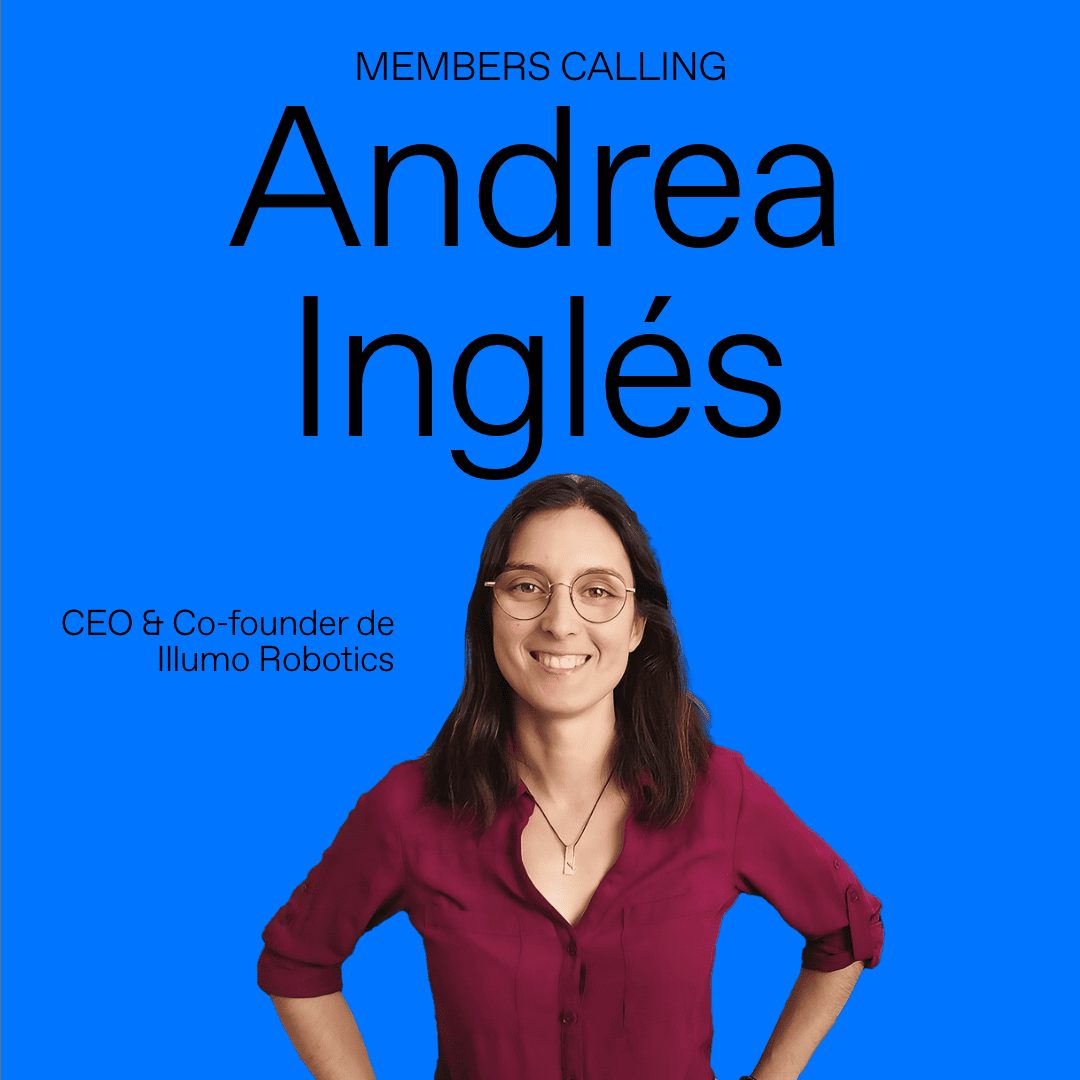
An Illumo Robotics robotic arm can identify and handle over 1,000 order items per hour—the equivalent of the work done by three people in the same timeframe.

Andrea Inglés (Barcelona, 1991), an aeronautical engineer, founded the startup in France with a clear mission: to improve working conditions for warehouse employees, enhance their productivity, and lower e-commerce operating costs. This vision is brought to life through an intelligent picking solution capable of identifying and manipulating objects on trays and pallets with precision.


TB: What is the purpose of your project?

AI: We want to improve the conditions of people working in warehouses and create value.


TB: Where do you stand and where do you see it in two years?

AI: Right now we have our first robots in production for Tradeinn in Girona, and we are invoicing. In two years, we will have demonstrated that the project is scalable, with dozens of robots running.


TB: A good idea you’ve had.

AI: In the first company where I worked, I asked untrained and completely unmotivated operators how we could improve the production process. At first it was a disaster because their answers didn’t make any sense. But I kept asking until they started experimenting and coming up with solutions that worked. Not only did they manage to improve the manufacturing process, but they also regained motivation as they felt listened to and valued. This was the ‘Eureka’ moment that made me want to be an entrepreneur. I want to create a tool for operators to feel heard and have their chance to add value, beyond moving boxes.


TB: What is the biggest challenge you have faced?

AI: Not giving up, no matter what. A couple of years ago at Illumo we were going to run out of money in a week. We had several outstanding salaries, no customer willing to pay, no investor willing to put money in, and our prototype wasn’t working. It seemed like it was impossible. But even so, we continued to believe in Illumo. At the last moment, a loan that was supposed to come, but never did, arrived. Three months later, our prototype was working, we had our first customer order and our first pre-seed ticket. What I learned is that there is always a solution and people worth pursuing it with.


TB: Best advice you’ve ever been given.

AI: Jump into the void. There is nothing to lose. Be that as it may, you can only gain experiences or successes.


TB: A role model.

AI: Verónica Pascual, ex-CEO of Asti and many other things since she made her exit. She transformed her family business into a mobile robotics company and now inspires a new generation of women in the technology sector.


TB: A technology that will shape the future.

AI: Humanoid robots, when the technological barriers that still exist have been overcome.


TB: Face-to-face or remote?

AI: Face-to-face, I love the passion and excitement in people’s eyes.


TB: A startup or company.

AI: Pets & Vets. We were in the Esade eWorks accelerator at the same time. The CEO is one of these fantastic people who are great at executing. It’s inspiring the energy she puts in and how radiant she is.


TB: What makes you disconnect?

AI: In order of how often, I play sports, talk to my family and friends, and meditate.


TB: A book to recommend.

AI: ‘The Design of Everyday Things’ by Don Norman. It’s a book that whatever you do you can use when designing experiences, products and interactions.


TB: A series, movie or song that defines your life moment.

AI: ‘The Law According to Lidia Poët’ series. Lidia is a fighter who doesn’t conform to the easy role of her time, the late 19th century.


TB: A recipe, a restaurant.

AI: The family recipe for ‘panellets’. It is one of my favorite traditions that I love to perpetuate wherever I am in the world and I feel connected to my family and identity. I have a similar relationship with Can Roca’s restaurant, homemade Catalan cuisine.


TB: A place in the world.

AI: Castellserà is a small village in the province of Lleida where I made my first adventures, built my first structures with mud and wood and embarked my cousins and my brother on impossible feats.


TB: Where would you invest 100k?

AI: I would build a humanoid robot for myself.


TB: If you were not an entrepreneur…

AI: I would be an entrepreneurship teacher, coach or project manager in a changing and ambitious environment.


TB: What is Tech Barcelona for you?

AI: It’s opportunities, whether it’s to talk business or technology with interesting people at the events, participate in pitch sessions or make connections. One of the best opportunities for me was to learn about the Esade eWorks accelerator program thanks to their newsletter. It was a key moment for Illumo and for me.

29 November 2024 Members Calling

Noticias

TB Members Calling #112 | Oriol Iborra: “Changing lives”

29 November 2024 Members Calling

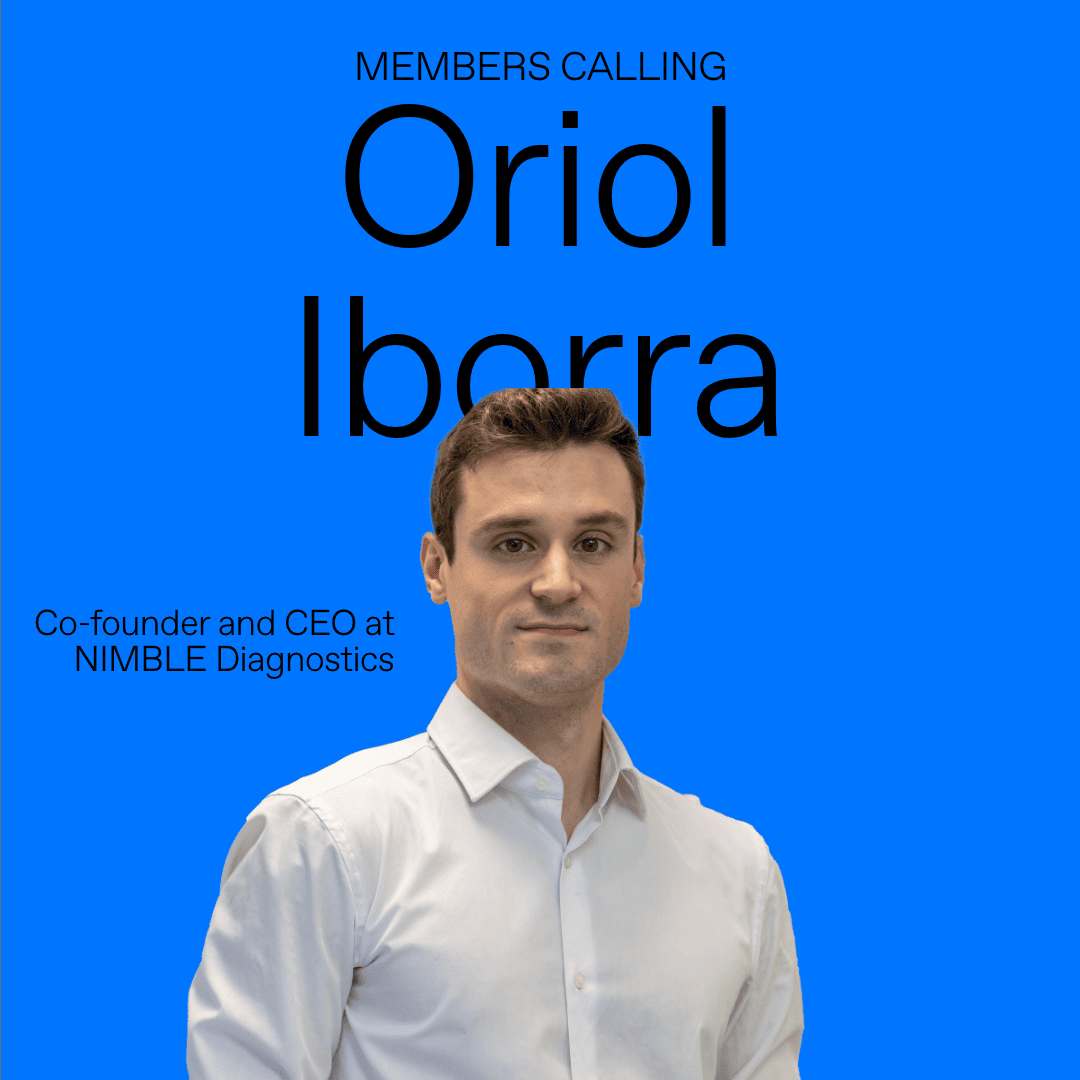
Oriol Iborra (Barcelona, 1991) studied Molecular Biology, a master’s degree in Genetics and Genomics at the UB and a PhD in Medicine specializing in cardiovascular diseases at the IGTP, a group led by Professor Antoni Bayés-Genís in collaboration with the CMRB and Stanford University. This was followed by a postdoc at Harvard Medical School and, in addition, training in technology transfer and entrepreneurship at La Salle Business School and the UPF School of Management. Because research has an impact when it reaches patients. And the creation of a company is the best way to do so.

Now as CEO and co-founder of NIMBLE Diagnostics, Oriol attacks one of the leading causes of death in the world: cardiovascular accidents. His startup is dedicated to the non-invasive monitoring and control of stents, devices used to restore proper blood flow.


TB: What is the purpose of your project?

OI: To revolutionize cardiac care. With NIMBLE Diagnostics we want to make stent monitoring as simple as reading a barcode: noninvasive, accurate and accessible.


TB: Where are you at and where do you see it in two years?

OI: We are in the midst of clinical validation in humans and have raised 5.5 million euros. In two years, I see our devices going through the certification process to put them in leading hospitals in Europe and the United States. Changing lives.


TB: A good idea you’ve had.

OI: Convincing people smarter than me to join the team. Now we work together and, no matter what, they make me look good. A CEO is only as good as his team!


TB: What’s the biggest challenge you’ve faced?

OI: Transferring technology from the university to a company. It requires navigating bureaucracies, assembling diverse teams, and transforming science into business.


TB: Best advice you’ve been given.

OI: “Don’t fall in love with your technology; fall in love with the problem it solves.” This advice has allowed me to always prioritize the patient and their needs.


TB: A role model.

OI: Professor Antoni Bayés Genís, my doctoral thesis director, has been an inexhaustible source of inspiration. His passion for cardiology and translational research (translation of research results into outcomes that benefit society), combined with a tireless dedication to the advancement of medicine, has taught me the value of excellence and innovation. His leadership at the Germans Trias i Pujol University Hospital and at the Universitat Autònoma de Barcelona, as well as his commitment to the training of new professionals, have left a profound mark on my professional development. His example motivates me to pursue excellence and to contribute to the progress of medicine with the same passion and dedication he shows every day.


TB: A technology that will shape the future.

OI: A technology that will shape the future is quantum computing. Although it is still in development, its potential for solving complex problems is immense. In medicine, it could revolutionize drug design by simulating molecular interactions with unprecedented precision. Beyond healthcare, it will impact fields such as cryptography, logistics optimization and artificial intelligence, enabling advances that today seem like science fiction. Its ability to process information at exponential speeds will transform entire industries, opening doors to innovations we cannot yet imagine.


TB: Face-to-face or remote?

OI: A well-balanced hybrid. Face-to-face interaction fosters creativity, but remote work improves productivity and quality of life, increasingly important in a globalized employee force.


TB: A startup or company.

OI: Boston Dynamics, a startup that is revolutionizing robotics with machines capable of moving, adapting and performing complex tasks in diverse environments. Its technology has the potential to transform entire industries, from logistics and construction to healthcare and emergency rescue. It’s a demonstration of how advanced robotics can redefine what we think is possible in work and everyday life.


TB: What makes you unplug?

OI: I play chess, a passion passed down to me from my grandfather, who was a Grandmaster. Every game with him was full of teachings and good times, and now it’s my way of relaxing and remembering him.


TB: A book to recommend.

OI: “The Innovation Stack” by Jim McKelvey. It’s an inspiring book about how to solve problems in innovative ways, even when there is no clear path. Perfect for entrepreneurs.


TB: A series, movie or song that defines your life moment.

OI: “Moneyball”, a story that demonstrates how innovation and data can challenge established rules and transform an entire industry, something that resonates very much with what we do at NIMBLE.


TB: A recipe, a restaurant.

OI: In winter, I especially enjoy “Carlota Akaneya,” a Japanese restaurant in Barcelona that offers a unique sumibiyaki experience, a traditional Japanese barbecue. The quality of its ingredients and the cozy atmosphere make it an ideal place for cold nights.


TB: A place in the world.

OI: Selfoss, Iceland. It’s like being on another planet: waterfalls, geysers, and pristine nature. Iceland is a place that has appealed to me my whole life.


TB: Where would you invest 100k?

OI: In social impact startups or disruptive medical technologies, where every euro can transform lives.


TB:If you weren’t an entrepreneur…

OI: I would still be a researcher. My passion has always been in improving people’s health and quality of life.


TB: What does Tech Barcelona mean to you?

OI: It’s the meeting point for innovation and talent in Barcelona, a catalyst for projects that really change the world.

21 November 2024 Members Calling

Noticias

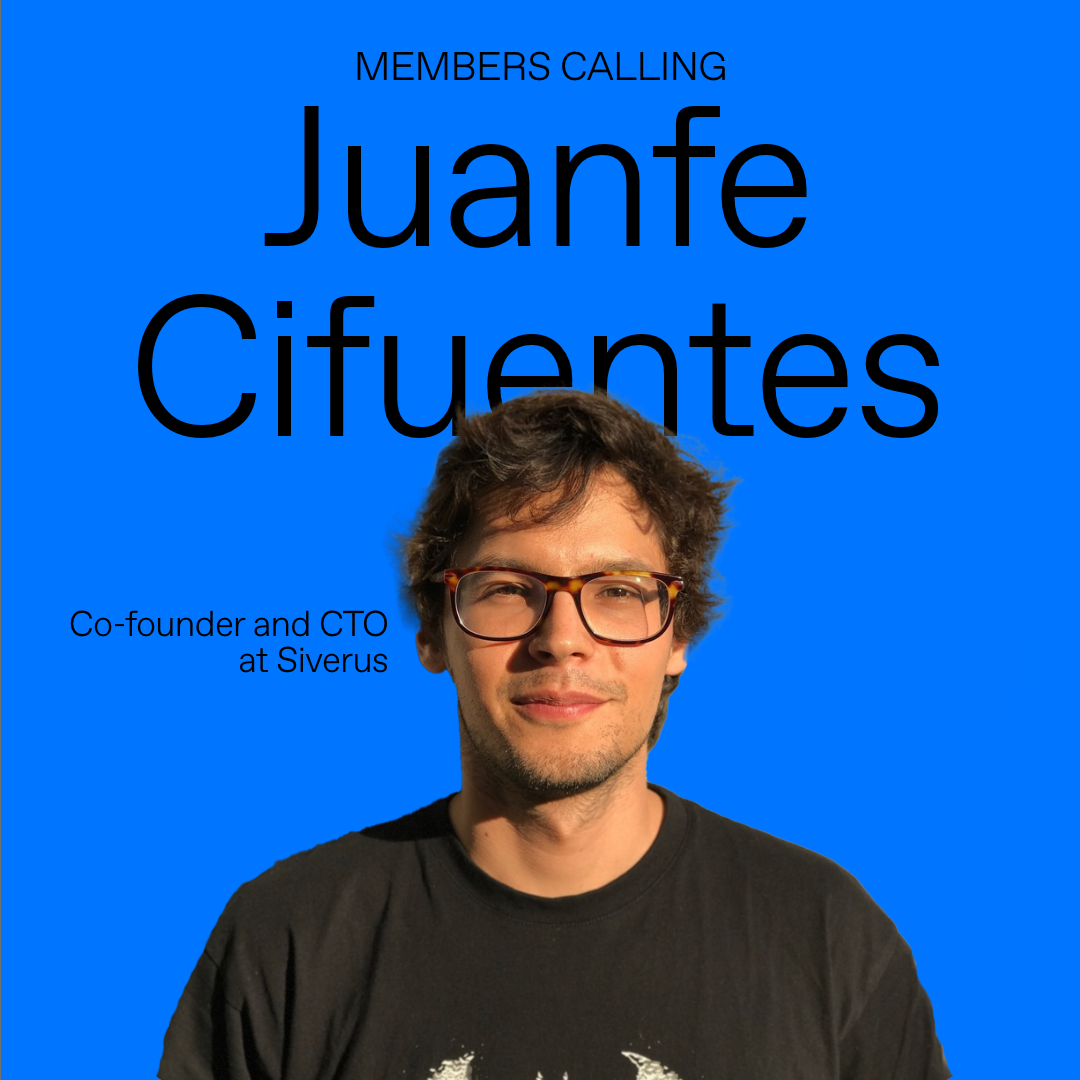
TB Members Calling #111 | Juanfe Cifuentes: “Creating a startup has made me grow and decide where I set my own limits”

21 November 2024 Members Calling

A body remains in motion unless an external force stops it. And for Juanfe Cifuentes (Colombia, 1990), nothing and no one stops him. Inertia has led this industrial engineer to study an MBA, project management programs and a bootcamp in emerging technologies; to spend 10 years developing talent and creativity in a major company like Apple; and, since 2019, to create his own project.

As co-founder and CTO of Siverus, Juanfe develops technological solutions to address security challenges in companies. And his principles, will continue to keep him in a constant movement towards innovation.


TB: What is the purpose of your project?

JC: The purpose of Siverus is to turn workplace safety on its head. We want to use IoT technology to ensure that PPE is being used correctly in real time, whether it’s a hard hat, boots, goggles or a harness. Workplace accidents are not just measured in money, they also have a huge impact on people and their families, and that’s what we want to avoid. We want to get ahead of the accident, to make sure that employees are well protected, to reduce the risk and the consequences. It’s not just about complying with regulations, it’s about optimizing safety resources and, above all, protecting lives in high-risk environments.


TB: Where are you at and where do you see it in two years?

JC: Right now, Siverus is in a growth phase and we are expanding our market in Catalonia. We already have clients in high-risk sectors such as the manufacturing industry and the electrical sector. In two years, I imagine a bigger team, consolidated and growing even more. The exciting thing is to see that companies really want to protect their employees and not just comply with regulations. Our next step is to open the product to more markets, starting with Asia and Latin America. We want to be a reference in intelligent security.


TB: A good idea you’ve had.

JC: To take the plunge and take the risk. It wasn’t easy. You don’t always have a clear head, but you have to do it even with fear and always with courage. This project has made me grow and has taken me to my own limits, and therefore I have been able to decide where I want to place them. Besides, everything that has to work has to be tested. Fortunately, I was able to take the idea to an MVP and prove that it worked. The truth is that entrepreneurship is not an innovative idea, but if you find the ecosystem where you fit and that becomes your support and fuel, then that is the idea that can make a difference, both for you and for all those that your project can impact.


TB: What’s the biggest challenge you’ve faced?

JC: Without a doubt, the biggest challenges are in the people. Managing expectations and maintaining good communication is something I try to get better at every day. With a project as demanding as Siverus, this challenge is getting bigger and bigger. Working in a company that integrates customers and people with hardware and software means leading a diverse team, full of people with their own dreams and expectations. Leading them only makes you the one who helps them find their place and achieve their goals. Not easy, but rewarding.

Technologically? My challenge has been to learn not to rush. I have had to understand that it is better to wait for the client to request new functions. My technical side always wants to keep moving forward, looking for improvements and solutions, but the hardest and most important thing sometimes is to know how to listen and give space for the real needs to be expressed.


TB: The best advice you have been given.

JC: Without a doubt, the best advice I’ve received is “shut up, listen, ask, listen, shut up and listen again.” It’s about understanding that every interaction is a unique moment and it’s important to let go of all preconceived ideas to be ready to learn again, whether it’s from your environment, your family, or your clients. Only then, you can ask questions that bring value, and perhaps, you can contribute in a meaningful way. In the case of Siverus, this approach has been key for us to create a stable, scalable and truly useful solution that brings real value on a day-to-day basis. In the end, it’s about being there, listening carefully and responding with solutions that make a positive impact.


TB: A role-model.

JC: Joan. I met him at school. He didn’t finish it, but he always showed incredible perseverance. He didn’t fit into the system, but that didn’t stop him. He started as a salesman and worked his way up, always with the goal of really helping his customers and his company. He has always been able to find what is really important, and now he leads a whole area in a multinational company. He has a great position, and he got there by genuinely caring for his customers and his co-workers. I think that’s the key. That thing really matter to you. She inspires me to keep going even when it seems too hard, to learn, to fit in when it doesn’t seem possible, to wait for the right time, and to pursue what I want. Joan taught me that sometimes being a little intense and believing in what you do makes all the difference.


TB: A technology that will shape the future.

JC: Information technology will be key in defining the type of content we consume and what we consider important in the world. This will influence people’s decisions in the future, especially with the incorporation of artificial intelligence (AI) and augmented reality (AR). I envision a future where screens as we know them disappear, and our interaction with technology becomes much more natural and immersive, allowing us to connect in completely new ways with our surroundings. Beyond this, what I really hope for is a technology that allows us to generate energy in a sustainable way. I recently read an article that talked about transforming waste to build on the Moon and Mars, and that got me thinking about how information technologies can make us think that it is crucial to recycle on the Moon, but not yet a priority to do so on Earth. I think these kinds of paradoxes and how we approach our priorities will profoundly shape the future.


TB: Face-to-face or remote?

JC: Mixed and on demand! I believe in the value of face-to-face teamwork, in the connections that are created and in the dynamics that emerge when we live together. Even so, in our company we work mostly remotely and asynchronously, as several of our members are out of the country, and this has worked perfectly. I believe that the mixed environment is fundamental to promote work-life balance and keep people motivated. The combination of both ways of working allows us to be efficient without losing the human contact that we value so much.


TB: A startup or company.

JC: Bubuclean.eco. They work with a lot of dedication repairing and cleaning baby accessories: strollers, bags, clothes, clips, and many other things. I believe that many families need baby products that are top quality, but also with that touch of care and safety that the second-hand market doesn’t always offer. And that is exactly what Bubu brings: a commitment to quality and to the little details.


TB: What makes you disconnect?

JC: Spending time with my son Bruno, he’s always in a good mood and is a super fun person. He’s lovely, so we take the opportunity to go for a walk in the woods with our dog Coco. The two of them are what really allow me to disconnect and enjoy the moment with mindfulness. Before, my way of disconnecting was to go out on a motorcycle, but times change and now this is what I enjoy the most.


TB: A book to recommend.

JC: There is a book that really impacted me: “Never Split the Difference” by Chris Voss. He was an FBI negotiator in hostage situations, and the way he shares his experience is a blast. It teaches you how to handle high-pressure scenarios, with negotiation techniques that not only work in the workplace, but also in everyday life. I highly recommend it, because beyond learning to negotiate, you learn to communicate better, to listen, and to find creative solutions even in situations that seem impossible. It is a book that changes the way you see conflicts.


TB: A series, movie or song that defines your moment in life.

JC: “Ted Lasso.” The series has something very special to me, I love how it addresses leadership and empathy in an environment as competitive as sports. I think it reflects a lot of what I try to apply in my day to day life, especially the idea that leadership is not just about winning, but how to motivate your team, support them and bring out the best in everyone. Ted inspires me to connect and care about people, and that’s the energy I want to carry in me.


TB: A recipe, a restaurant.

JC: Kyoto Restaurant in Las Palmas de Gran Canaria, they have brutal Japanese food, also the bravas at “ErreKa” in Sant Cugat del Vallès. And as a recipe, the poke we prepare at home.


TB: A place in the world.

JC: For me, the ideal place is the driver’s seat. I love the feeling of being on the move of going somewhere, even if I don’t have a fixed destination. If I had to pick one place in the world, it would be any road, because what I really enjoy is the journey itself, that freedom of being able to go anywhere.


TB: Where would you invest 100k?

JC: I would invest in education, especially in the training of the new generations. I believe that the key to a better future lies in preparing young people with skills and knowledge that will enable them to face the challenges of tomorrow. In fact, our project is also about educating people to work, to protect themselves better and to work more safely.


TB: If you weren’t an entrepreneur…

JC: I think, if I wasn’t an entrepreneur, I’d like to go into manual labor for a while. I love the idea of building, sanding, painting… maybe working in a woodshop. In fact, one of the projects I’m most proud of is the shoe rack we have at home. I love being able to create something with my own hands, it’s something that fulfills me and allows me to disconnect.


TB: What is Tech Barcelona for you?

JC: For me, Tech Barcelona is a community that connects you with people who are passionate about innovation. It’s where you can learn, collaborate and share experiences. As a new member, I am very excited to learn more about the ecosystem and connect with inspiring people. Also, I think the AfterWork is an excellent opportunity to establish good relationships in a more relaxed environment.

7 November 2024 Members Calling

Noticias

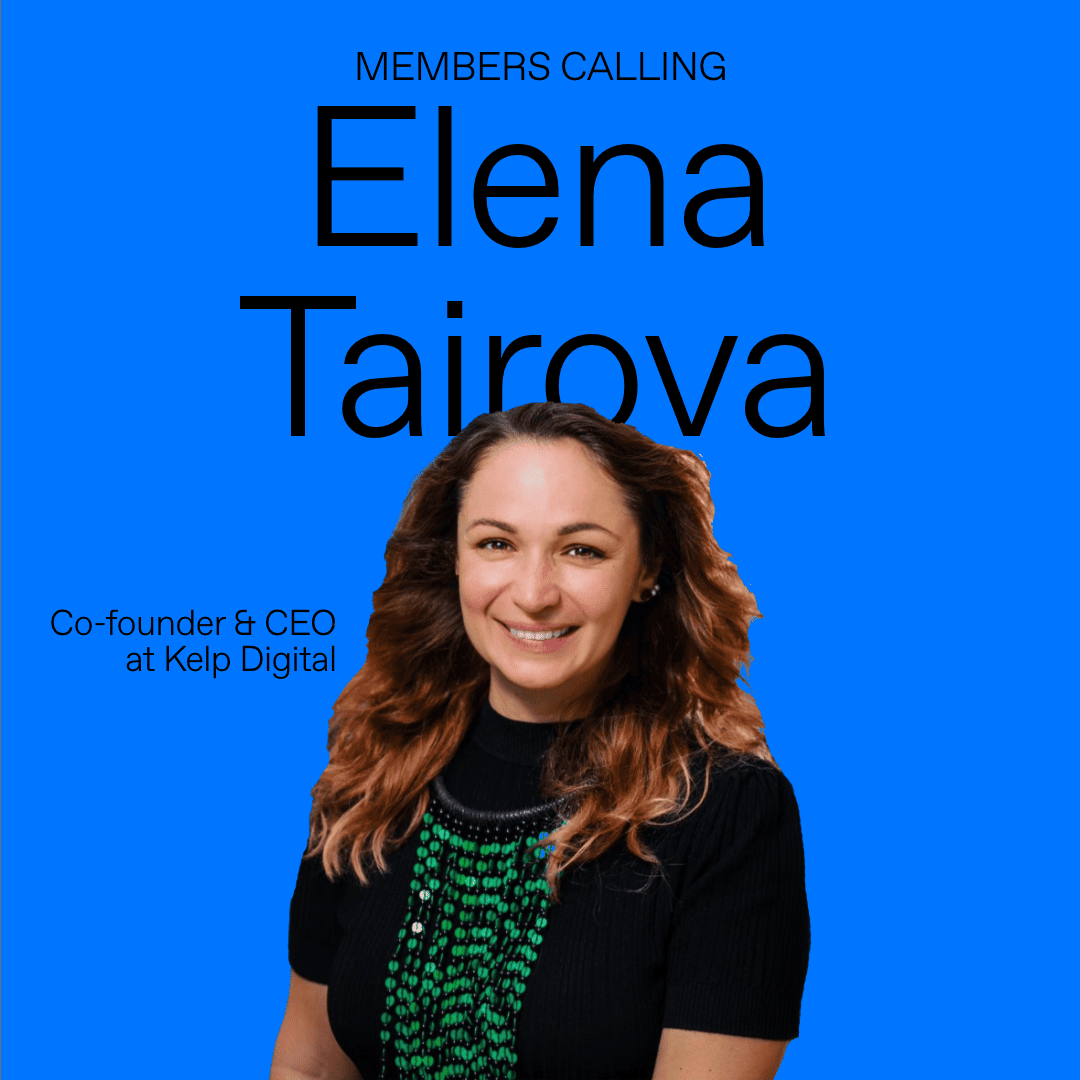
TB Members Calling #110 | Elena Tairova: “Find your anchor, focus, and move forward”

7 November 2024 Members Calling

Born and raised in Russia, Elena Tairova (Kaluga, 1989) has lived and worked all over the place, including London and Beijing, but has been calling Barcelona home for the past seven years. From working in investment banking, marketing and communications, to now being an entrepreneur – Elena has co-founded Kelp.Digital, a software lab for creators. “Your content, your rules”.


TB: What is the purpose of your project?

ET: We build software to help creators of original content (visual art, photography, music) protect their rights, receive the appreciation they deserve, and be able to monetize their work on their terms. Unfortunately, over 90% of creative content shared online is freebooted or stolen, and “it’s easier to ask for forgiveness than to get permission” has become the unspoken rule for online content usage.

We’re working to change that with our state-of-the-art tech that enables creators to easily track and manage their content, protect it from unauthorized use, and open opportunities for monetizations that has previously been overseen.


TB: What stage is it currently at, and where do you see it in two years?

ET: We’ve launched two core products so far: Macula.Link and the Anagolay Network. Anagolay, launched in 2022, is an open-source framework for content ownership and transparent rights management. It lets creators assert their rights and set the rules for how their work can be used. But, right now, we’re putting all our energy into Macula.Link a SaaS also for creators and rightholders that allows you to transform your content library into real-time APIs.

In two years time our goal is to become a market standard for ensuring fair compensation for creative work. We want a future where creators are in charge of their content and also set their own rules for how it’s used, no matter what platform it’s on. Basically, it’s all about making the principle “your content, your rules” a reality for everyone.


TB: A good idea you’ve had.

ET: The first thing that comes to mind is relocating to Barcelona. It heated up the change process in all aspects of my life.


TB: What is the biggest challenge you’ve faced?

ET: Finding motivation when everything falls apart. I’ve experienced my fair share of ups and downs on my startup journey. They say we learn more from our mistakes, and I could probably teach a 3-week Coursera course about mine. So, the most challenging thing for me was not to dwell on my mistakes for too long, but to take the valuable lessons without letting them shake my self-esteem. I had to find my anchor, focus, and move forward.


TB: The best advice you’ve ever received.

ET: Do not do things out of fear but out of love. It may sound a bit hippy, but to me, this principle has a brilliant application in all aspects of life, including business. If you make decisions out of fear of missing out on an opportunity, being outcompeted, or losing in comparison, they are likely to be the wrong ones. Focusing on doing what you enjoy and working towards a purpose you’d love to see realized will give you much better guidance.


TB: A role model.

ET: Meredith Whittaker, current CEO of Signal. She’s a great example of female leadership in tech that stands out in terms of both vision and results achieved. Her recent strategy at Signal is evidence that surveillance capitalism is not the only path forward for the future of technology.


TB: A technology that will shape the future.

ET: In the first place, ClimateTech and Renewable Energy. Innovation and the speed of its adoption in this area will determine the advancement of other sectors, which are becoming increasingly energy-consuming, as well as our overall well-being. Then there’s Quantum Computing, which is still in the early stages of the innovation cycle, but once that breakthrough happens, it will open up possibilities that are now unthinkable. Ultimately, Applied AI. As for GenAI, though initially is way more impressive, its transformative potential will primarily be focused on entertainment and media, which we can only hope it won’t be too devastating for the creative industry as we know it.


TB: Face-to-face or remote?

ET: A mix, with a heavy tilt towards the remote. I’d say 85% remote and 15% in-person. Flexibility, freedom, and self-motivation are key priorities for me and my team. While I value the benefits of remote work, I also believe that occasional face-to-face meetings are essential for connecting, aligning, and building chemistry with the people you’re working with (which is really important to me too).


TB: A startup or company.

ET: Gumroad. They embody the same idea that lies at the core of what we build: empowering thousands of creators to earn a living doing what they love. Not only their software, but Gumroad’s entire company culture and business model is aligned with this idea. I also love the ups and downs of their founders story, which demonstrates resilience and dedication to their core purpose. Now, they have a few million creators earning with their platform, which has allowed them to generate over twenty million dollars in revenue last year.


TB: What makes you disconnect?

ET: Physical activity is the only thing that works for me to either disconnect or focus. I do yoga, go for a jog, or, and when time allows, do water sports. The sea is my absolute love and it always makes me disconnect.


TB: A book to recommend.

ET: ‘¡Silencio!’ by Pedro Bravo. I stumbled upon this book completely by chance in a bookshop in Madrid, and it turned out to be a brilliant find at the right time. I believe it’s a must-read for people in tech. You might agree or disagree with some of the ideas, but it’s a perfect starting point for an important thought process: how do we want technology to shape our future society? In what way?

And an all-time favorite – the ‘Culture Series’ by Iain M. Banks. I love science fiction, because, in order to create something, we need to image it first. In this series, Iain M. Banks did a fantastic job of imagining what human coexistence with self-aware AI could be like.


TB: A series, movie or song that defines your moment in life.

ET: It’s impossible for me to choose just one, as there’s only one constant: change. This week, it’s ‘Till the Sun Comes Up’ by Jack and the Weatherman and ‘Steampunk Pixie’ by Frenchy and the Punk.


TB: A recipe, a restaurant.

ET: ‘Can Mario’ in Badalona. Their specialty is rice, and they truly do magic with it whether it’s paella or risotto. Even if you think you don’t like paella, after trying theirs, you’ll change your mind.


TB: A place in the world.

ET: Fuerteventura. That’s the place that changed my life, setting off a chain of events that led me to move to Spain, start my own business, change and grow in every possible sense. It’s also a paradise for water sports, offering four distinct landscapes within just one hour drive: from white dunes to Martian craters. Every time I visit, I feel light, super-energized and free. It’s an unmatched feeling.


TB: Where would you invest 100k?

ET: In people who believe in what they do and genuinely try to make our world better, what they actually do is less important than their passion, skill and determination.


TB: If you weren’t an entrepreneur…

ET: The thing I love the most is learning: by reading, listening, or by doing. I enjoy absorbing new knowledge and experiences, and then sharing my curiosity and findings with the world. So, I’d choose any occupation that allows me to do this. Being an entrepreneur means constant learning, and sometimes the hard way, that’s why I enjoy it so much. But maybe I could be a traveling scholar or an artist. Given my recent discoveries, I might even consider becoming a yoga or free-breath diving instructor. Or, perhaps, the best option would be a combination of all these.


TB: What does Tech Barcelona mean to you?

ET: A place to connect. It’s a vibrant community that brings together tech talent, entrepreneurs, and everyone involved in supporting the tech startup ecosystem. I also love the mix of local Catalan and Spanish companies with international ones. I’d say, compared to some other European hubs, Barcelona’s startup scene overall still seems a bit more closed and localized, so I appreciate the work Tech Barcelona does to bridge the local startup scene with the global tech community. They’re doing an amazing job of breaking down barriers and creating opportunities for everyone.

I’m just joining the community, so I’m excited to discover more about what Tech Barcelona has to offer.


Privacy Overview
Tech Barcelona

This website uses cookies so that we can provide you with the best user experience possible. Cookie information is stored in your browser and performs functions such as recognising you when you return to our website and helping our team to understand which sections of the website you find most interesting and useful.

Strictly Necessary Cookies

Strictly Necessary Cookie should be enabled at all times so that we can save your preferences for cookie settings.

Analytics

This website uses Google Analytics to collect anonymous information such as the number of visitors to the site, and the most popular pages.

Keeping this cookie enabled helps us to improve our website.