3 July 2026 Members Calling News

Noticias

Members Calling #166 | Gabriela Moncada: “Before obsessing over selling, obsess over solving the problem well”

3 July 2026 Members Calling News

In communication, arriving late to a topic is the same as saying nothing. Brands compete every day to be part of the conversation. They try to understand their audience, detect new trends, and join the trending topics of the moment on time… But the pace is becoming increasingly frantic. Conversations emerge, explode, and disappear before many companies have even finished approving the copy.

Lexy was created to solve this challenge. Through artificial intelligence, the startup identifies hot topics according to each company’s profile and helps adapt their communications to the conversations of the moment.

Behind the project is Gabriela Moncada (Caracas, 1988), CEO and co-founder of the platform. An economist by training, with specializations in international business management, digital marketing, and web development, she began entrepreneurship at a very young age alongside her family in Venezuela. Today, Lexy brings together three worlds that have always accompanied her: entrepreneurship, communication, and technology. She explains how.


TB: What is the purpose of your project?

GM: Lexy’s purpose is to help companies, entrepreneurs, and organizations communicate better, with more strategy and less friction. Most companies have very valuable propositions, but they struggle to turn what they know, what they do, and what is happening in their sector into useful content for their audience. Lexy helps them precisely at that point: it connects their brand data with relevant trends and news to turn all of that into more strategic, personalized, and actionable publications. We want communication to stop being an operational burden and become an advantage for growth.


TB: Where does your project stand now, and where do you see it in two years?

GM: Lexy is currently in a stage of growth, commercial validation, and product consolidation. In two years, I see Lexy as a leading platform for automating content creation for small and medium-sized companies; a tool that works with you, proposes strategic content, and allows you to maintain creative control, but with much less operational effort.


TB: A key decision that has shaped your project.

GM: One key decision has been to be very clear about the problem we wanted to solve, while remaining flexible along the way. When we started Lexy more than four years ago, almost nobody was talking about artificial intelligence. Many of our potential clients still did not fully understand how this technology could help them in their day-to-day work. Over the years, the market changed completely, AI became omnipresent, and that forced us to adapt, differentiate ourselves quickly, and make decisions in an environment with a lot of noise. I think what has shaped us the most has been staying focused without becoming rigid, listening to the market, evolving the product, and continuing to work on a need that we clearly saw in companies.


TB: What has been the biggest challenge you have faced, and what has it taught you?

GM: One of the biggest challenges has been sustaining the project during moments of great uncertainty. Entrepreneurship is not as simple as it may seem. There are stages when you have fewer resources, a smaller team, and many difficult decisions ahead.

In our case, we went from being a larger team to having to keep moving forward with very little capital and just two people pushing something we strongly believed in. Little by little, we began to grow again, build a team, and bring forward the product we have today. That taught me that when you have a clear focus and work with the right people, you can go through very difficult moments without losing direction.


TB: The best advice you have been given.

GM: Before becoming obsessed with selling, become obsessed with solving the problem well. When you build something that truly helps, selling stops feeling like a transaction and becomes a natural consequence of providing value. For me, that advice has been very important because it reminds me that a company is not built only from what it wants to offer, but from what its clients truly need.


TB: Todos cambiamos con el tiempo. ¿Has cambiado de opinión sobre algo?

GM: I used to think you had to analyze a lot before making a decision. Over the years, and especially through entrepreneurship, I have understood that clarity often comes after taking action, not before.


TB: A professional role model who inspires you.

GM: Claudia de la Riva, CEO and founder of Apolo Kids. I am inspired by her energy, her consistency, and her ability to keep going even when the path is not easy. Entrepreneurship requires a lot of resilience, and I think Claudia represents very well that combination of vision, passion, and execution capacity needed to build a company with impact.


TB: What do you value most in the people you work with?

GM: I greatly value commitment and empathy. In a startup, especially when the team is small, each person has a huge impact. It is not only about technical talent, but also about attitude, responsibility, and the ability to build with others. At Lexy, we have a small but very committed team, and I believe that is one of our greatest strengths.


TB: A technology that will shape the future.

GM: I believe quantum computing will profoundly shape the future.


TB: A startup or company you admire and why.

GM: Muse Scene Lab, because they are transforming a very traditional industry such as music education by combining technology, creativity, and a very clear vision of the future. I am especially inspired by how they are bringing new ways of practicing, learning, and connecting with music. Entering such an emotional sector, and one so deeply rooted in classical methods, is not easy. I believe projects that dare to innovate in spaces like this have great merit, because they do not only create technology; they also change habits, experiences, and ways of learning.


TB: What do you do to disconnect?

GM: Discovering new places and connecting with other cultures. I feel that traveling broadens your perspective, helps you understand that there is not just one way to live or see the world, and allows you to return with more perspective. I also meditate and go to the gym.


TB: A book to recommend.

GM: I would recommend ‘Control’, by Freddy Vega, especially for people who are starting a business or building something of their own. It is a book that connects very well with the idea of taking responsibility for your path, your decisions, and your growth. Entrepreneurship often means moving through uncertainty, and I think this kind of reading helps you remember that, although you cannot control everything, you can control how you respond, how you learn, and how you move forward.


TB: A song that defines your current stage in life.

GM: ‘Imagine’, by John Lennon. Because of the moment we are living through as a society, I think it remains a very necessary song. It talks about imagining a different world, one that is more human and more united. I wish some songs could become reality.


TB: A recipe, a dish, a restaurant.

GM: Eatvolve, in Italy. They say they are not a restaurant because they go beyond that, and I think you understand it when you get to know them. It is a concept where food is approached from the perspective of well-being. Their dishes are gluten-free, dairy-free, free from added sugars, and free from additives. One of their phrases is: “You don’t eat there, you nourish yourself there.”


TB: A place in the world.

GM: Canaima, in Venezuela. It is one of the most impressive places I have ever visited. Angel Falls, the highest waterfall in the world, is there, but beyond that, it is a place where nature feels immense, pure, and imposing. It is one of those places that makes you feel small, but at the same time gives you an incredible connection with this wonderful planet.


TB: Where would you invest 100k?

GM: Today, I would invest it in Lexy, without a doubt. We are building something with great potential and at a key moment to accelerate. I would invest in continuing to strengthen product, sales, and growth, in order to reach more companies and prove that AI can help communicate better when combined with data, strategy, and real knowledge of the user.


TB: If you were not an entrepreneur…

GM: I would probably dedicate myself to mentoring and supporting other projects. It is something I already do and that fulfills me a lot. I enjoy helping other entrepreneurs organize ideas, question assumptions, detect opportunities, and move forward with greater clarity. Entrepreneurship is not easy, and often an external perspective can help you see what is difficult to identify from within.


TB: What is Tech Barcelona to you?

GM: It is a key community within the city’s entrepreneurial ecosystem. I was already familiar with its work before creating Lexy, and I have seen how, in recent years, it has helped connect, showcase, and strengthen startups, entrepreneurs, and technological initiatives. I believe spaces like this are very necessary, because entrepreneurship can be a very lonely path if you do not have a community around you.

18 June 2026 Members Calling News

Noticias

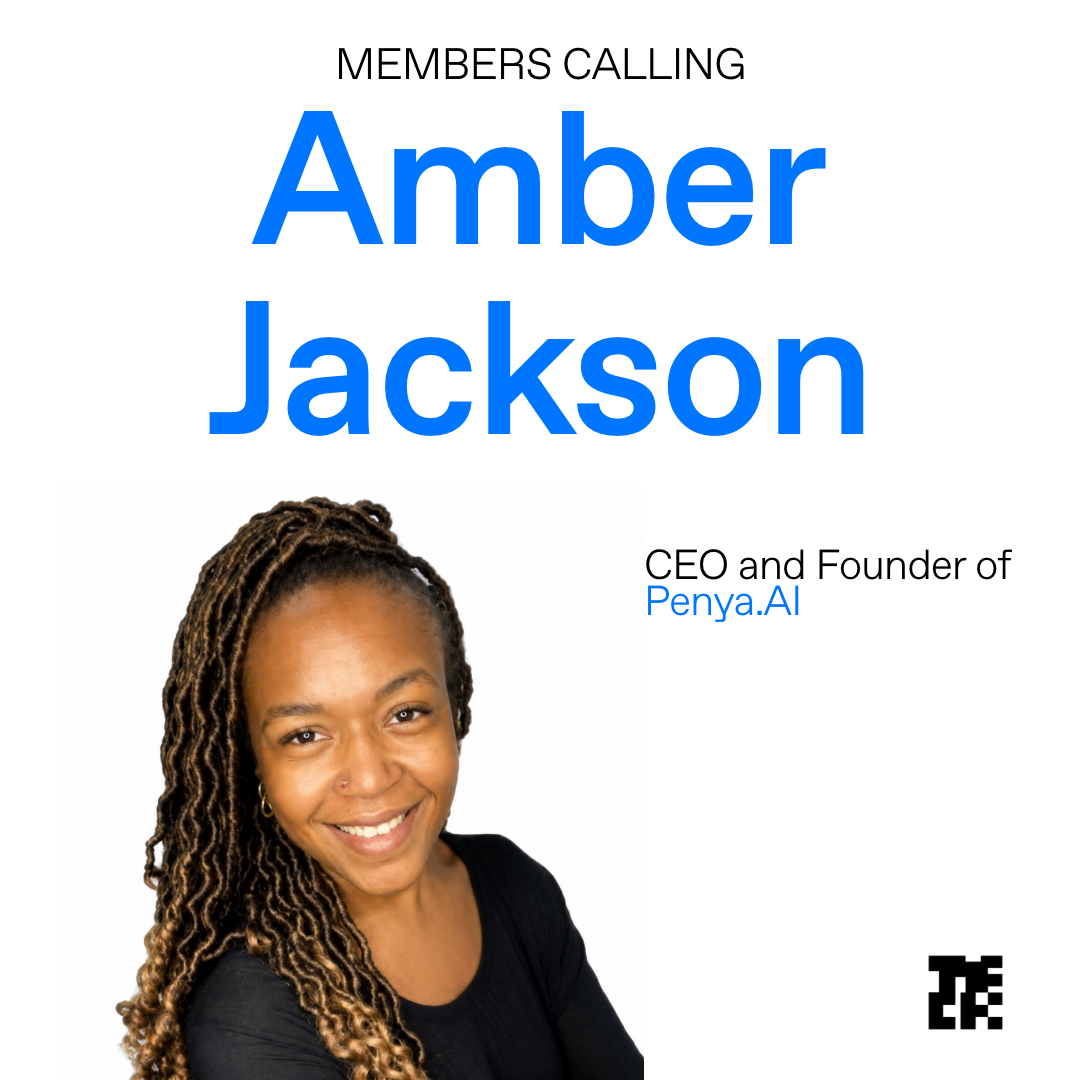
Members Calling #165 | Amber Jackson: “Work hard to create your own luck, and be ready when luck finds you”

18 June 2026 Members Calling News

Moving abroad is often synonymous with an exciting new beginning.

However, as Amber Jackson (United States, 1989) knows from personal experience, it can also be an “isolating and overwhelming” journey. When she relocated to Barcelona in 2022, she found herself urgently needing to hire an immigration lawyer. Without one, she risked having to leave the country. Fortunately, she could also rely on her circle of friends, what in Catalonia we might call a “penya”, a close-knit group of people you trust and can count on. That experience showed her the value of having a reliable support network and ultimately inspired the creation of Penya.AI, an AI-powered platform that helps expats navigate life in a new country.

Before founding the startup, Amber built a 14-year career spanning the technology and media industries. A graduate of the Kellogg School of Management at Northwestern University, with an exchange program at IESE Business School, she held a variety of roles at companies such as Hulu and King, where she led growth initiatives and forged partnerships with some of the world’s leading technology companies.


TB: What is the purpose of your project? 

AJ: Penya was created to help the growing globally mobile population improve their lives. Living abroad can be incredibly exciting, but also isolating and overwhelming when trying to find trusted services, communities, and recommendations. Our goal is to make navigating a new city more human, intelligent, and community-driven.


TB: Where’s your project at and where do you see it in two years? 

AJ: We’re preparing to launch our Beta app and lining up strategic partnerships. In two years, I see Penya expanding into multiple cities and becoming the go-to platform for trusted local discovery among expats and globally mobile professionals.


TB: key decision that has shaped your project. 

AJ: Choosing to remain a solo founder has been an extremely difficult yet rewarding decision. It challenges me every day, but I’ve learned an immeasurable amount while still finding ways to ask for and receive help.


TB: What has been the biggest challenge you’ve faced, and what has it taught you? 

AJ: Bootstrapping is challenging. Every decision is a tradeoff, but it’s taught me how to be creative and resourceful.


TB: The best advice you’ve ever received. 

AJ: At the end of each “How I Built This” episode, Guy Raz asks his guests: “How much of your success was due to skill and hard work, and how much was due to luck?” There’s a general consensus amongst the guests that I always keep in mind: you need to do the hard work to not only create your own luck, but be ready when luck finds you.


TB: We all change over time. What have you changed your mind about? 

AJ: In the olden days, it was vital to have a technical co-founder to build anything and achieve success, so solo founding felt like a huge risk. As AI democratizes access to knowledge and technology, my choice feels more justified, especially since around half of startups fail due to co-founder friction.


TB: professional role model who inspires you and why.

AJ: My mother. She is the most resilient woman I know, has always excelled at any task she’s given, and can truly turn nothing into something astonishing.


TB: What do you value most in the people you work with? 

AJ: Curiosity, integrity, adaptability, and kindness. I value people who are ambitious but collaborative; the kind of people who are willing to solve hard problems together without ego.


TB: technology that will shape the future.

AJ: Fintech for globally mobile professionals. Navigating financial systems as an expat, banking, taxes, and cross-border payments, is still far more complicated than it should be. Companies like Wise, N26, and Revolut are making real progress, and I use all three myself. As more people choose to live and work across borders, the technology that makes financial life seamless for internationals will become essential infrastructure.


TB: startup or company you admire, and why.

AJ: Spotify. I admire how they combined technology, personalization, and culture to completely reshape how people discover and experience music globally.


TB: What do you do to disconnect?

AJ: go out dancing and see live shows – music forces me to be in the moment and just enjoy the experience.


TB: book to recommend. 

AJ: These days I consume podcasts more than books.  I’d highly recommend “How I Built This”, hosted by Guy Raz. It covers the entreprenaurial journey of the founders of some of the biggest companies today and often serves as inspiration or encouragement. 


TB: song that defines your moment in life. 

AJ: I often have the song “Nothing Even Matters” by Lauryn Hill ft. D’Angelo on repeat. It reminds me not to sweat the small things, to keep moving forward past setbacks, and that there are more important things in life.


TB: recipe, a meal, a restaurant. 

AJ: One of the things I really miss about the US is breakfast! So I frequently go to Caravelle, which is one of my favorite breakfast spots in the city.


TB: A place in the world. 

AJ: I love Japan. It’s lively, creative, and modern while, at the same time, full of history and tradition. It’s a fascinating intersection of cutting-edge technology and early civilization.


TB: Where would you invest 100k? 

AJ: In my own business 


TB: If you weren’t an entrepreneur 

AJ: I’d probably still be working in the entertainment industry in some capacity because I loved being at the intersection of storytellingtechnology, and culture.  


TB: What does Tech Barcelona mean to you? 

AJ: I met some of my first and best entrepreneur friends in line at a Tech Barcelona event, so to me, it means community.

18 June 2026 News

Noticias

Tech Spirit Breakthrough 2026 | “You Don’t Know It Yet, But You’re Also an Entrepreneur”

18 June 2026 News

“Can AI-generated inventions be patented?”
“It’s a myth that the US innovates while Europe regulates.”
“To all researchers: you don’t know it yet, but you’re also entrepreneurs.”

These were some of the topics discussed at this year’s Tech Spirit Breakthrough at Pier07, a summit that gathered TTO leaders, spin-off founders and investors focused on one challenge: how to get more science out of the lab and into the market. Here are a few moments that stood out:


  • “Long Live Breakthrough”
    The day opened with Javier Selva, Director General for Knowledge Transfer and Society at the Generalitat de Catalunya, and Miquel Martí, CEO of Tech Barcelona. Selva highlighted Catalonia’s commitment to accelerating innovation, particularly in healthcare, while also creating opportunities in sectors that have traditionally received less attention and funding. Together, they emphasised the importance of connecting research, entrepreneurship and industry to strengthen the innovation ecosystem. And concluded: “Long Live Breakthrough”.


  • Can AI-Generated Inventions Be Patented?
    According to Ignasi Costas, Managing Partner at RCD and General Secretary of Tech Barcelona, the answer (for now) is no. Patent systems still require a human inventor. But the discussion quickly expanded beyond intellectual property to address a broader range of legal and regulatory issues. As AI becomes increasingly integrated into everyday research, universities and research institutions are facing a new challenge: how to govern these technologies responsibly while preserving their capacity to innovate.


  • “You Don’t Know It Yet, But You’re an Entrepreneur”
    Research has always been at the heart of Eli Bou’s career, one of the most influential figures in Barcelona’s tech ecosystem. But it was only when someone told her, “You don’t know it yet, but you’re an entrepreneur,” that she began to see herself differently. Soon after, she founded Vilynx, a startup acquired in 2020 by Apple. Now she has become a serial entrepreneur with Cala AI. Building a research group and building a startup have far more in common than people think.


  • The Myth That Europe Only Regulates
    “It’s simply not true that the U.S. creates and Europe regulates.” That’s according to Ignasi Belda, currently Director of AI at the Bank of Spain (entrepreneur; former Director General of Spain’s AI Supervisory Agency; and former CEO of the Barcelona Science Park, among other roles). In a conversation with Ana Maiques (Neuroelectrics), he shared how AI is already embedded in many processes at the Bank of Spain, with much of this innovation work being driven from Barcelona.


  • “I Became an Entrepreneur So Science Could Become Reality”
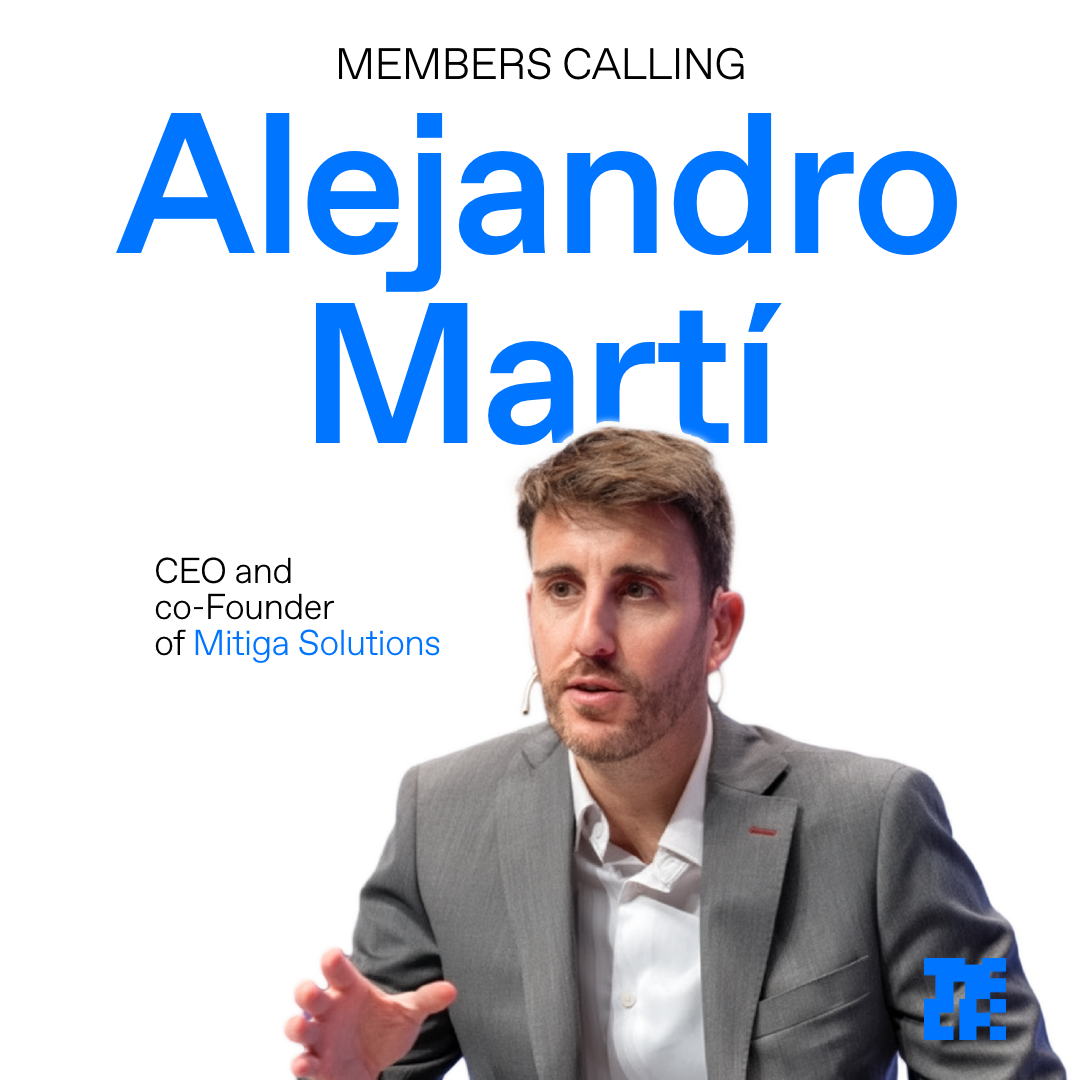
    During a chat hosted by Endeavor, Alex Martí, CEO and Co-founder of Mitiga Solutions, put it best: “I didn’t leave science to become an entrepreneur. I became an entrepreneur so science could become reality.”


  • Demo Day
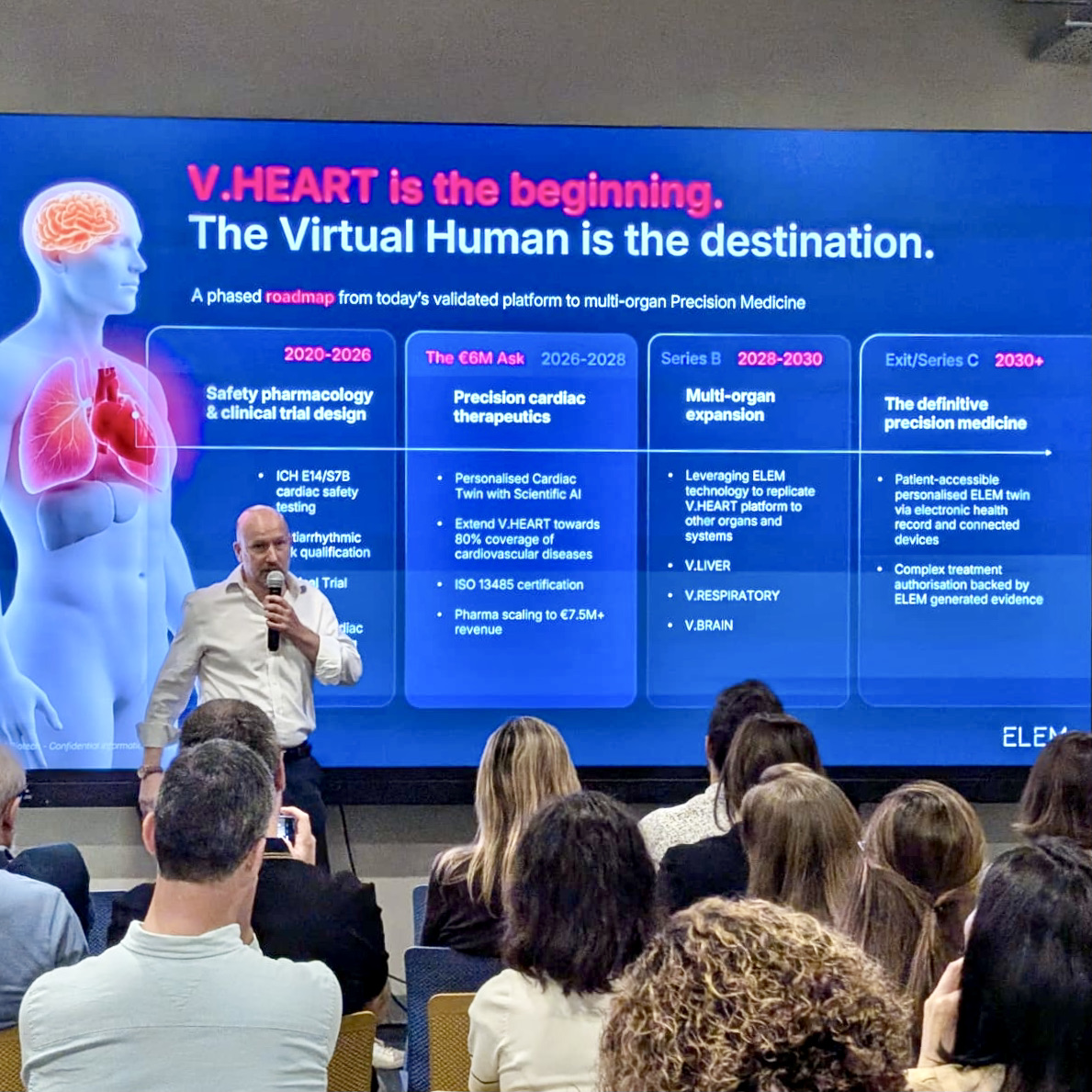
    We heard pitches from 10 spin-offs: ELEM Biotech, AiQUOS, Flavii, PlasmOnCo, EAR, Virtest Technologies, ATOM H2, Adonis and OneCareAI, followed by live questions from investors in the audience.


  • What Investors Are Looking For
    The day closed with a panel featuring investors from Faber VC, Plus Partners and Invivo Partners, moderated by ACCIÓ. Investors are looking for more than great technology. Strong teams, clear market opportunities, scalability and the ability to execute remain just as important as the underlying science.


17 June 2026 News

Noticias

A Dialogue Between the European Commission and Barcelona’s Tech Ecosystem

17 June 2026 News

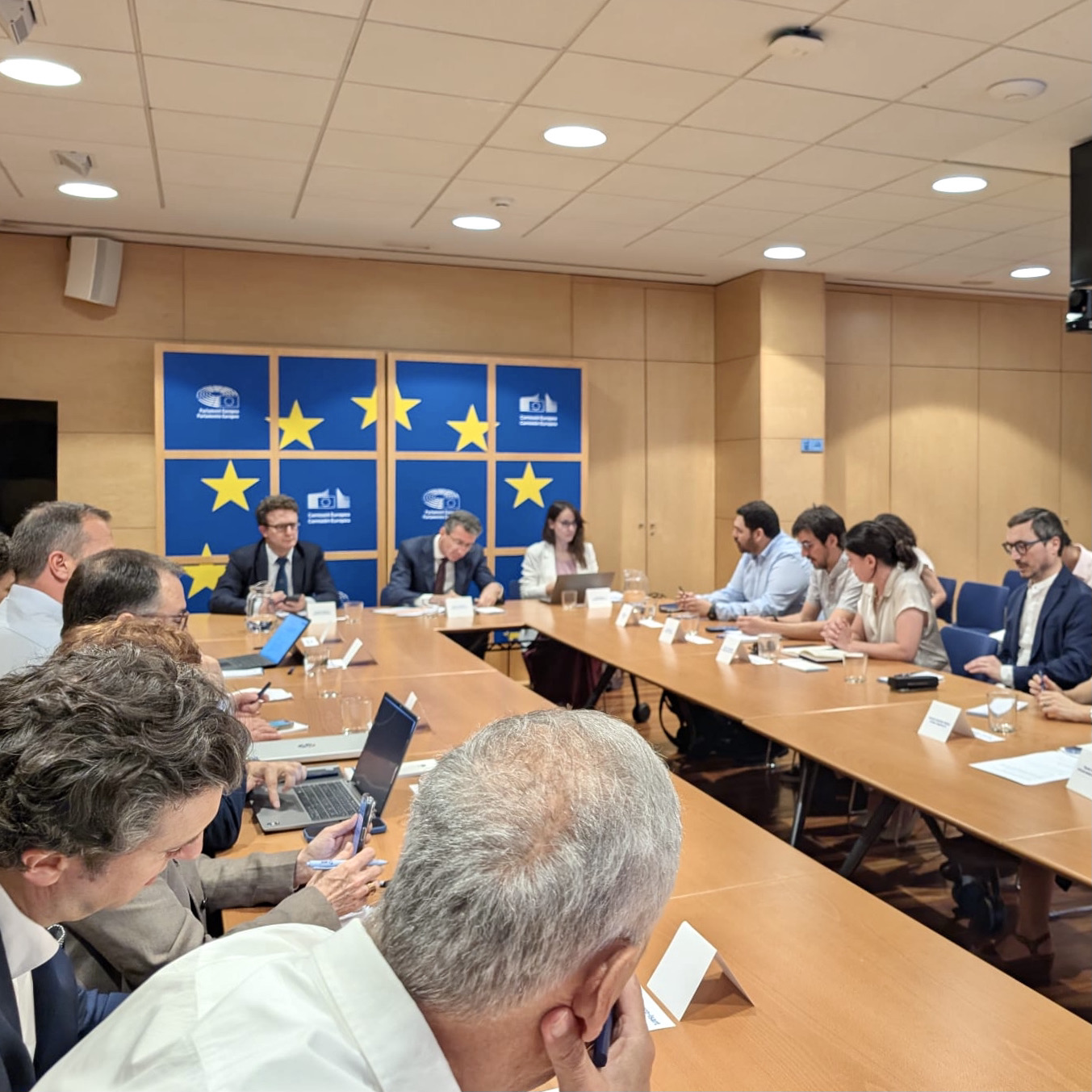
This week, the Catalan tech ecosystem met with Mr. Marc Lemaître, Director-General for Research and Innovation at the European Comission, to discuss the main challenges facing European startups, scaleups, research centres and scientific infrastructures, and to explore policy measures that could strengthen Europe’s technological competitiveness.

  • Funding. Lemaître acknowledged the need to strengthen European funding mechanisms for startups and scaleups. He highlighted that the European Innovation Council (EIC) has significantly increased its investment capacity. He also referred to the launch of the new Scaleup Europe Fund, designed to support larger financing rounds and help European technology companies grow at scale. According to Lemaitre, the ambition is to mobilise investment rounds approaching €100 million and narrow the financing gap with the United States. He stressed that Europe must seize the opportunities presented by emerging technologies such as artificial intelligence and create many more globally competitive technology companies.


  • Regulation. On regulation, Lemaître recognised that fragmentation remains one of Europe’s main competitiveness challenges. He noted a strong commitment within the European institutions to further harmonise regulations and reduce barriers between Member States. He also referred to initiatives related to innovation procurement and upcoming measures aimed at simplifying administrative processes. His key message was that Europe must increasingly function as a true single market rather than a collection of national markets. 


  • Demand creation. Lemaître agreed that both public administrations and large European corporations tend to be highly risk-averse when adopting new technologies. He argued that Europe needs a stronger culture of experimentation and greater willingness to test innovative solutions. Creating “safe spaces” for innovation and expanding public procurement of innovative technologies were highlighted as important tools to stimulate demand and accelerate the growth of technology companies. He also noted that Europe still has significant room to increase overall demand for innovation.


  • Infrastructure. Regarding scientific and technological infrastructures, Lemaitre emphasised that Europe already possesses world-class assets. Rather than focusing exclusively on building new facilities, he argued that the priority should be improving access, coordination and utilisation of existing infrastructures. He advocated for a genuinely European approach, allowing researchers, startups and companies to access facilities regardless of their country of origin. In his view, more efficient and collaborative use of existing infrastructures could substantially increase their scientific and economic impact.


  • Talent. On talent, Lemaitre acknowledged that Europe benefits from an exceptional scientific base but still has considerable room for improvement in technology transfer and commercialisation. He stressed the importance of strengthening links between research, entrepreneurship and business development, while also improving Europe’s ability to attract and retain highly skilled professionals. Given the growing global competition for researchers, engineers and entrepreneurs, he considered talent attraction and retention to be a strategic priority for Europe.
16 June 2026 News Partners

Noticias

French Unicorn Spendesk Joins Tech Barcelona to Accelerate Growth in Spain

16 June 2026 News Partners

Spendesk, the European AI-powered spend and procurement management platform, has joined the Tech Barcelona association as a Corporate Partner. This partnership is part of the company’s growth strategy in Spain.

Founded in Paris and now recognized as one of Europe’s leading technology scaleups, Spendesk offers an all-in-one platform that simplifies corporate spend and procurement management, covering everything from payments and expense claims to invoices, business travel, and accounting automation.

The partnership with Tech Barcelona coincides with a new phase of growth in Spain for Europe’s first profitable spend management platform. With more than 75,000 companies within its target market and close to one hundred active customers, the fintech sees Barcelona as a strategic gateway to accelerate its expansion and strengthen its presence in the country.

According to Martin Kaplan, Head of Sales at Spendesk, “Barcelona is one of Europe’s most dynamic technology ecosystems, and Tech Barcelona does an excellent job of bringing together the very best of it. Being part of this network allows us to connect with the right people at the right time and help companies keep their finances under control as they scale.”

For his part, Miquel Martí, CEO of Tech Barcelona, stated: “Europe needs more scaleups like Spendesk—companies that grow into international leaders while helping thousands of businesses scale. As an association, we want to bring these types of solutions closer to Barcelona’s startups and SMEs so they can become more efficient, scalable, and competitive. The fact that Spendesk has chosen Barcelona as a base for its continued growth demonstrates the strength and attractiveness of our ecosystem.”

11 June 2026 Members Calling News

Noticias

Members Calling #164 | Marta P. Estarellas: “We have entered a global race for the future of supercomputing”

11 June 2026 Members Calling News

There are still many questions without answers. How do we cure diseases that remain untreatable? How do we design materials that do not yet exist? How do we decipher processes that are too complex for today’s most powerful computers? Marta P. Estarellas (Mallorca, 1989) wants to push beyond those frontiers of knowledge.

As CEO of Qilimanjaro Quantum Tech, she leads one of the companies helping put Barcelona on the global map of quantum computing, one of the most transformative technologies of the coming decades. The spin-off, born out of the Barcelona Supercomputing Center (BSC), the University of Barcelona (UB) and the Institute of High Energy Physics (IFAE), has developed the quantum systems now integrated into MareNostrum 5, making the city one of the few places in the world where classical supercomputing, digital quantum computing and analog quantum computing coexist within the same scientific infrastructure. It has also launched Europe’s first multimodal quantum data center, aimed at accelerating applications in fields such as healthcare, advanced materials, energy and artificial intelligence.

A chemist by training, with a PhD in Physics and studies in Computer Science, Estarellas built her career across the United States, the United Kingdom and Japan before returning to join a global race with a clear objective: creating the tool capable of answering, at last, some of the questions humanity has been trying to solve for centuries. Today, however, we ask her to set aside science’s biggest mysteries and answer ours.

Throughout the conversation, one idea keeps resurfacing whenever she talks about the future. Beyond technology, she insists, lies humanism: something that, “no matter what happens,” should continue to guide the way we understand the world. “First people, then technology, and then money,” she says.


TB: What is the purpose of your project?

MP: To build more sustainable and efficient computers—machines that allow us to expand our understanding of the world around us and, in doing so, improve people’s lives.


TB: What stage is the project at, and where do you see it in two years?

MP: We were founded in 2019 and are currently in a phase of accelerated growth. We’ve entered a truly global race, and in two years’ time, I’d like to see our technological approach established as one of the world’s leading paths toward the future of supercomputing.


TB: A key decision that has shaped your project.

MP: Prioritizing people first, technology second and money third.


TB: What has been the biggest challenge you’ve faced, and what has it taught you?

MP: Making ourselves heard and becoming less hesitant. It taught me the importance of being in the right place at the right time and, above all, not letting opportunities pass by.


TB: The best advice you’ve ever received.

MP: No matter what happens, never stop looking at things through the lens of humanism.


TB: We all change over time. Have you changed your mind about anything?

MP: I used to doubt whether real innovation could happen within a company. Today, I know it can.


TB: A professional role model who inspires you.

MP: Vanesa Díaz from LuxQuanta. One of the best CEOs I know.


TB: What do you value most in the people you work with?

MP: A genuine passion for what we do.


TB: A technology that will shape the future.

MP: Quantum computing, without any doubt. There is no future for AI without quantum computers.


TB: A startup or company you admire and why.

MP: Open Cosmos. A remarkable example of growth and resilience, led by its CEO, Rafel Jordà—also from Mallorca—who has built and continues to lead an excellent and ambitious project.


TB: What do you do to disconnect?

MP: Surround myself with my animals.


TB: A book you would recommend.

MP: ‘El último hombre blanco’, by Nuria Labari.


TB: A song that defines your current moment in life.

MP: ‘Alpinistes-samurais’, by Antònia Font.


TB: A recipe, a dish or a restaurant.

MP: Teriyaki chicken. And a burger from Antonia’s on long workdays.


TB: A place in the world.

MP: Tokyo.


TB: Where would you invest €100k?

MP: In any scientist or engineer excited about an entrepreneurial idea.


TB: If you weren’t an entrepreneur…

MP: I’d be a veterinarian.


TB: What is Tech Barcelona to you?

MP: The metropolitan tech hub that brings us together and connects us. A meeting point.

4 June 2026 Members Calling News

Noticias

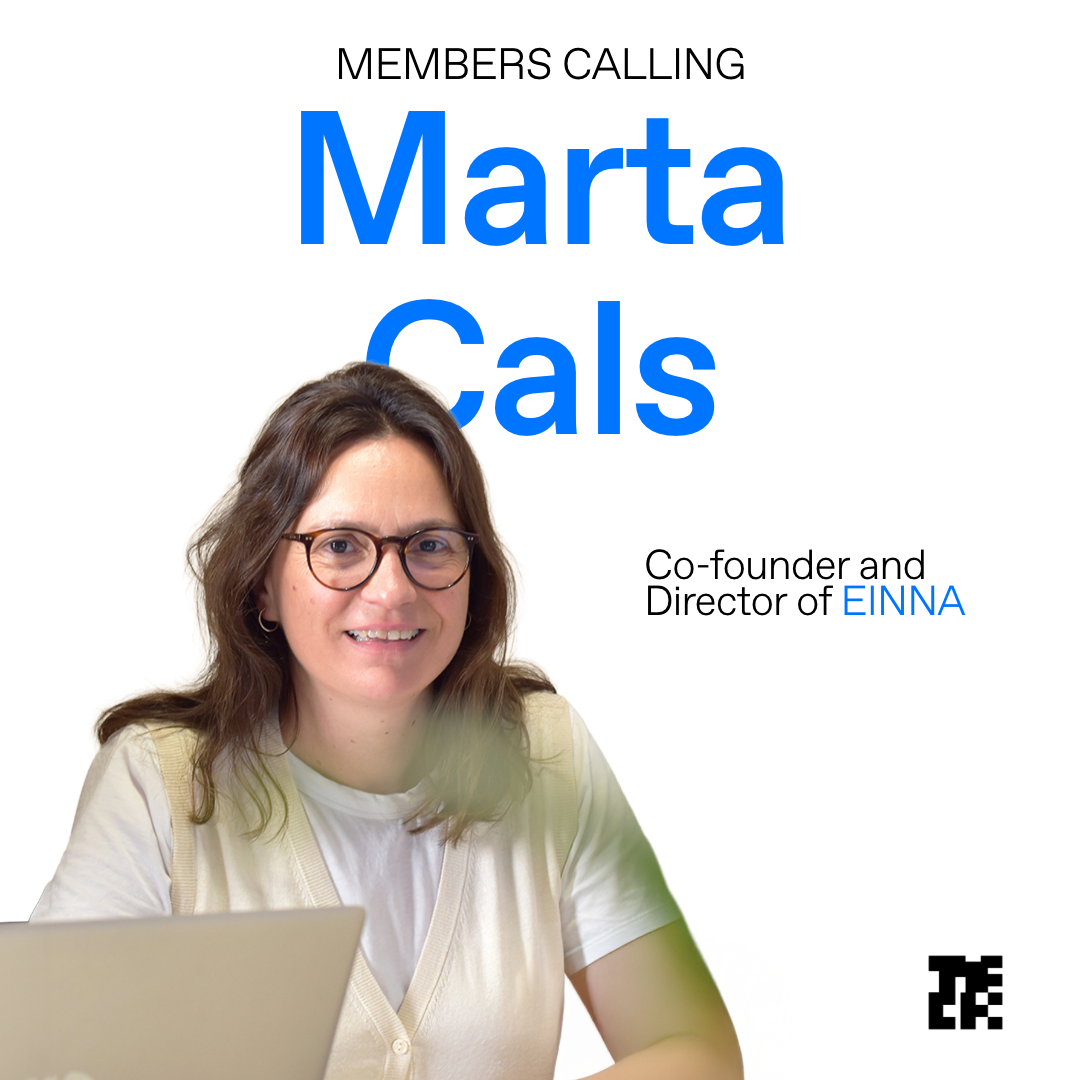
Members Calling #163 | Marta Cals: “If I weren’t an entrepreneur, I’d be lost”

4 June 2026 Members Calling News

“Being sustainable is a matter of survival.”

Companies know it. Regulators demand it. Customers expect it. Yet, amid regulations, metrics, and acronyms, many organizations find themselves in the same place: they want to move forward, but they do not know where to start.

That is why EINNA was created, a project co-founded and led by Marta Cals (Bisbal de l’Empordà, 1981) to make sustainability more accessible for businesses. A law graduate with more than fifteen years of experience supporting organizations in the integration of ESG criteria, she has first-hand knowledge of the challenges involved in turning intention into action. In this mission, she is joined by Núria Tintoré, co-founder of the initiative, a partnership that Cals describes as the contrast and balance “needed to sustain the project in the long term.”


TB: What is the purpose of your project?

MC: To become the leading sustainability resource for transforming the business landscape, providing the tools organizations need not only to comply with regulations but also to proactively align themselves with the most demanding international standards.


TB: At what stage is your project, and where do you see it in two years?

MC: We are currently in the monetization phase, validating our business model and consolidating our first clients. In two years, I see EINNA having made a strategic leap across Spain, supported by a strong and active network of companies and professionals who trust our technology to manage their impact.


TB: A key decision that has shaped your project.

MC: Without a doubt, the decision to start the business with a co-founder. Entrepreneurship is a complex journey when undertaken alone; having a partner brings me balance, complementary skills, a constant exchange of ideas, and the mutual support needed to sustain the project’s vision over the long term.


TB: What has been the biggest challenge you have faced, and what has it taught you?

MC: Going through a period of more than five months without closing any projects. It was a time of great uncertainty that put our resilience to the test. I learned that market timing does not always match your expectations and that sustainable success requires patience, resilience, and staying focused.


TB: The best advice you have ever received.

MC: “You need to get out and talk to companies.” Sometimes we lock ourselves away trying to design the “perfect” product from the office, but the real value and the answers are out there in the market. Listening directly to customers’ pain points and real needs is what allows you to pivot and offer solutions that truly matter.


TB: We all change over time. Have you changed your mind about anything?

MC: With time and experience, I have learned to put things into perspective and to embrace flexibility and active listening in my daily life. Perhaps I used to be more rigid in my thinking; today, I value broadening my perspective and understanding opinions and viewpoints that are radically different from my own, as that is often where the greatest learning lies.


TB: A professional role model who inspires you.

MC: Barbara Glaenzel, founder of Urbanauta. I am inspired by her conscious leadership style, the consistency of her business model and, above all, her perseverance in building a values-driven project in such a competitive environment.


TB: What do you value most in the people you work with?

MC: Consistency and enthusiasm. Talent is important, but a team that remains committed day after day and approaches challenges with energy and a desire to contribute is the true driving force behind any project that aims to create real impact.


TB: A technology that will shape the future.

MC: Our own technology: EINNA. We are convinced that tools designed to measure, manage, and optimize ESG criteria (environmental, social, and governance) will become indispensable for the survival and relevance of any company in the near future.


TB: A startup or company you admire and why.

MC: Eticas.ai. Founded by Gema Galdón, I consider them absolute benchmarks. I admire their leadership in algorithmic auditing and the way they actively work to ensure that technological development does not perpetuate bias, but instead promotes social justice, ethics, and fairness.


TB: What do you do to disconnect?

MC: Practicing yoga to reconnect with my body and mind, and spending quality time with family and friends. It is my way of recharging my energy and keeping my feet on the ground.


TB: A book you would recommend.

MC: ‘Waslala’ by Gioconda Belli. A magnificent novel that, through the search for a utopia, reflects on human nature, the environment, and the impact of our decisions.


TB: A song that defines your current stage in life.

MC: ‘A la vida’ by Maria Arnal (and Marcel Bagés). It is a luminous anthem, a reminder of collective strength, resilience, and the celebration of being present and engaged.


TB: A recipe, a dish, a restaurant.

MC: A good nettle soup (a local, wild, and surprisingly delicious dish). And as for a restaurant, El Badall in Girona, for its authenticity and respect for quality ingredients.


TB: A place in the world.

MC: L’Empordà. It is my home, my point of reference, and the place where I always find balance and inspiration.


TB: Where would you invest €100k?

MC: In projects and initiatives aimed at eradicating child poverty and promoting quality education. I believe that ensuring children’s well-being, equal opportunities, and access to education is the most urgent and transformative investment we can make for the future of our society.


TB: If you were not an entrepreneur…

MC: I would be lost. Entrepreneurship gives me purpose, freedom, and a way of understanding the world and social impact that would be difficult to fit into a traditional corporate model.


TB: What is Tech Barcelona to you?

MC: It means being part of a vibrant, innovative, and connected ecosystem; a window to the world that allows us to share synergies, learn from other sectors, and showcase local talent on a global scale.  

2 June 2026 News

Noticias

i2CAT Research Centre inaugurates its new facilities at Pier01

2 June 2026 News

We are opening a new chapter with the inauguration of the new headquarters of i2CAT Research Centre at Tech Barcelona’s Pier01.

“When we launched Pier01 in 2016—now 10 years ago—we did so with a very clear vision: to create a space that reflects the strength of Barcelona’s technology and digital ecosystem,” said Miguel Vicente, President of Tech Barcelona, at today’s event. After a decade of fostering connections between startups, corporations, universities, institutions, and entrepreneurial talent, today we take another step forward.

i2CAT’s new facilities feature 2,000 square metres of state-of-the-art laboratories dedicated to research in 6G, smart mobility, quantum technologies, and satellite networks, among other cutting-edge fields. This represents a strategic commitment to bringing research and industry even closer together.

The inauguration was attended by Albert Dalmau, Minister of the Presidency of the Government of Catalonia; Sergi Figuerola-Fernández, Director of i2CAT; Albert Tort, Secretary for Telecommunications and Digital Transformation; Maria Galindo Garcia-Delgado, Secretary for Digital Policies; Jordi Valls, Fourth Deputy Mayor of Barcelona City Council; and José Alberto Carbonell, President of the Port of Barcelona, among other authorities.

“We want knowledge to become solutions. Projects. Impact for the economy and people’s lives,” said Vicente.

The arrival of i2CAT marks another milestone in this evolution and reinforces Pier01’s role as a hub for public-private collaboration, where talent, research, business, and institutions work ever more closely together.

21 May 2026 Members Calling News

Noticias

Members Calling #162 | David Mora: “30% of drinking water in Europe is lost through broken pipes before it reaches a single tap”

21 May 2026 Members Calling News

Washing the dishes. Taking a shower. Watering the plants. Everyday routines that depend on something as automatic as turning on the tap. Yet behind that simple action lies an invisible reality: the enormous amount of water that is lost before it even reaches our homes.

In recent years, the water crisis has produced unprecedented images in Catalonia, such as the bell tower of the Pantà de Sau emerging above the waterline and prolonged water-use restrictions in different municipalities. That was when David Mora (Barcelona, 1987) felt it was his responsibility to put his knowledge at the service of this challenge. “It’s the kind of problem that deserves all my energy,” he says.

David is the CEO and co-founder of Kimedes AI, the startup aiming to “save millions of liters of drinking water every day” through satellite imagery and artificial intelligence. A Telecommunications and ICT Organization engineer with a Master’s degree in Project Management from La Salle and executive training in Innovation from Harvard and MIT, he spent seven years abroad before returning to Catalonia, where he launched the project alongside Jaume Miró, COO and co-founder.


TB: What is the purpose of your project?”

DM: To protect water for future generations. Around 25–30% of drinking water in Europe is lost through broken pipes before it reaches a single tap. We detect those leaks using satellite radar imagery and artificial intelligence, before anyone notices them. We can see it from space.


TB: At what stage is your project now, and where do you see it in two years?

DM: We have the AI engine up and running, our first municipal contracts signed, the backing of ESA and ENISA, and we’ve just completed the incubation program at the BSC AI Factory in Pier07. In two years, I want any municipality in Europe not only to know the condition of its water network, but also to receive concrete, prioritized recommendations before the problem even exists. Not reducing losses – eliminating them.


TB: A key decision that has shaped your project.

DM: We chose to rely on satellite data instead of deploying hardware, a decision that accelerated impact, eliminated implementation friction, and allowed us to scale without depending on physical sensors. Above all, it gave us focus on what we are really good at: algorithms and technology.


TB: What has been the biggest challenge you’ve faced, and what has it taught you?

DM: Trying to change the world from within the public sector. B2G is a space where there’s very little VC funding, cycles are slow, decision-makers are hard to reach, and yet the impact is real and massive. Nobody makes it easy for you. What it taught us was to understand the rules of the game from day one, to carefully calibrate our survival strategies, to scale thoughtfully, and to develop a kind of resilience that no master’s degree can give you. A lot of persistence and the conviction that it’s worth it.


TB: The best advice you’ve ever been given.

DM: Always remind yourself why you started, and appreciate your own milestones and progress without waiting for anyone else to validate them. This journey is yours, and you have to enjoy it, no matter how hard it gets.


TB: We all change over time. Have you changed your mind about anything?

DM: I used to believe that asking for help was a sign of weakness and a burden to others. When I broke free from that stigma, I discovered that people actually like helping and are often very willing to do so. You just have to ask. Rarely do people say no.


TB: A professional role model who inspires you.

DM: Javi Fernández, Founder and CTO. From him I learned never to settle and to constantly look for solutions to any challenge, especially technological ones. That mindset has stayed with me ever since.


TB: What do you value most in the people you work with?

DM: Humility and empathy. We are all constantly learning and making mistakes, and anyone who doesn’t accept that becomes a problem. Above all, I value execution: I’d rather see a failed experiment than a perfect plan that never leaves the paper.


TB: A technology that will shape the future.

DM: Without a doubt, quantum computing. Once it matures, it will help us better understand our world and solve problems even more complex than those we are capable of tackling today. 


TB: A startup or company you admire, and why?

DM: Planet Labs. They democratized access to satellite imagery and proved that space isn’t just for the big players. We draw inspiration from that philosophy every single day.


TB: What do you do to disconnect and unwind?

DM: The sea. It doesn’t matter whether it’s a walk with my family, sailing, surfing, or swimming. I need the sea. And if it’s the Mediterranean, even better.


TB: A book you would recommend.

DM: Shoot for the Moon, by Richard Wiseman: what Apollo 11 teaches us about taking on impossible challenges. And Start Something That Matters, by Blake Mycoskie: building a business with purpose from day one. Together, they say a lot about why I’m doing what I do.


TB: A song that defines this moment in your life.

DM: ‘Wonderful Nothing’ by Glass Animals.


TB: A recipe, a dish, or a restaurant.

DM: Mooma on the Costa Brava.


TB: A place in the world.

DM: The west coast of Ireland, which has been my escape valve for finding peace of mind for years. And the Black Forest in Freiburg, where I spend summers with my family and time seems to move differently. Two places that have nothing to do with each other, yet say a lot about what I need depending on the moment.


TB: Where would you invest €100k?

DM: In Kimedes AI. I strongly believe we are building the foundations of something big, with the ambition of becoming a benchmark for innovation, impact, and sustainability. It’s an investment in the future of our children and future generations.


TB: If you weren’t an entrepreneur…

DM: It’s hard for me to imagine a different future, but maybe I’d be a researcher in some technological field. I’m passionate about learning and exploring complex things — curiosity pulls me in, and then I love being able to share that knowledge with others.


TB: What is Tech Barcelona to you?

DM: A home. People with the same drive and the desire to change something. Perhaps the meeting point of the entrepreneurial ecosystem where everything converges. Right now, it’s my source of inspiration and connections close to home.

19 May 2026 News

Noticias

Barcelona’s startup ecosystem rises to 32nd globally, remaining among the EU’s five leading hubs

19 May 2026 News

Barcelona’s startup ecosystem rises to 32nd globally, remaining Spain’s top ecosystem and among the EU’s five leading startup hubs.

The latest Global Startup Ecosystem Index 2026 by StartupBlink highlights that Barcelona is the only city in Europe’s Top 5 still climbing the rankings, driven by a 5.5% growth and the increasing global relevance of its innovation ecosystem.

  • #23 worldwide in Social & Leisure, Barcelona’s strongest industry, which includes traveltech, gaming, entertainment and digital experiences.
  • #3 in Europe for Ecosystem Value, supported by a network of corporations, scientific infrastructure, universities, investors and ecosystem support organisations.
  • A region-wide success story, as all ranked cities in Catalonia have shown growth this year, making it the only region in Southern Europe where every city is expanding.

Spain’s representation in the Global Top 500 includes: Madrid (51), Valencia (150), Bilbao (254), Málaga (319), Sevilla (338), Girona (429), San Sebastián (438), Lleida (439) & Las Palmas de Gran Canaria (454).

At Tech Barcelona, we’ll continue working to keep this momentum growing.

Privacy Overview
Tech Barcelona

This website uses cookies so that we can provide you with the best user experience possible. Cookie information is stored in your browser and performs functions such as recognising you when you return to our website and helping our team to understand which sections of the website you find most interesting and useful.

Strictly Necessary Cookies

Strictly Necessary Cookie should be enabled at all times so that we can save your preferences for cookie settings.

Analytics

This website uses Google Analytics to collect anonymous information such as the number of visitors to the site, and the most popular pages.

Keeping this cookie enabled helps us to improve our website.